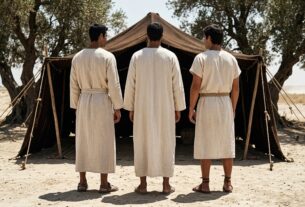
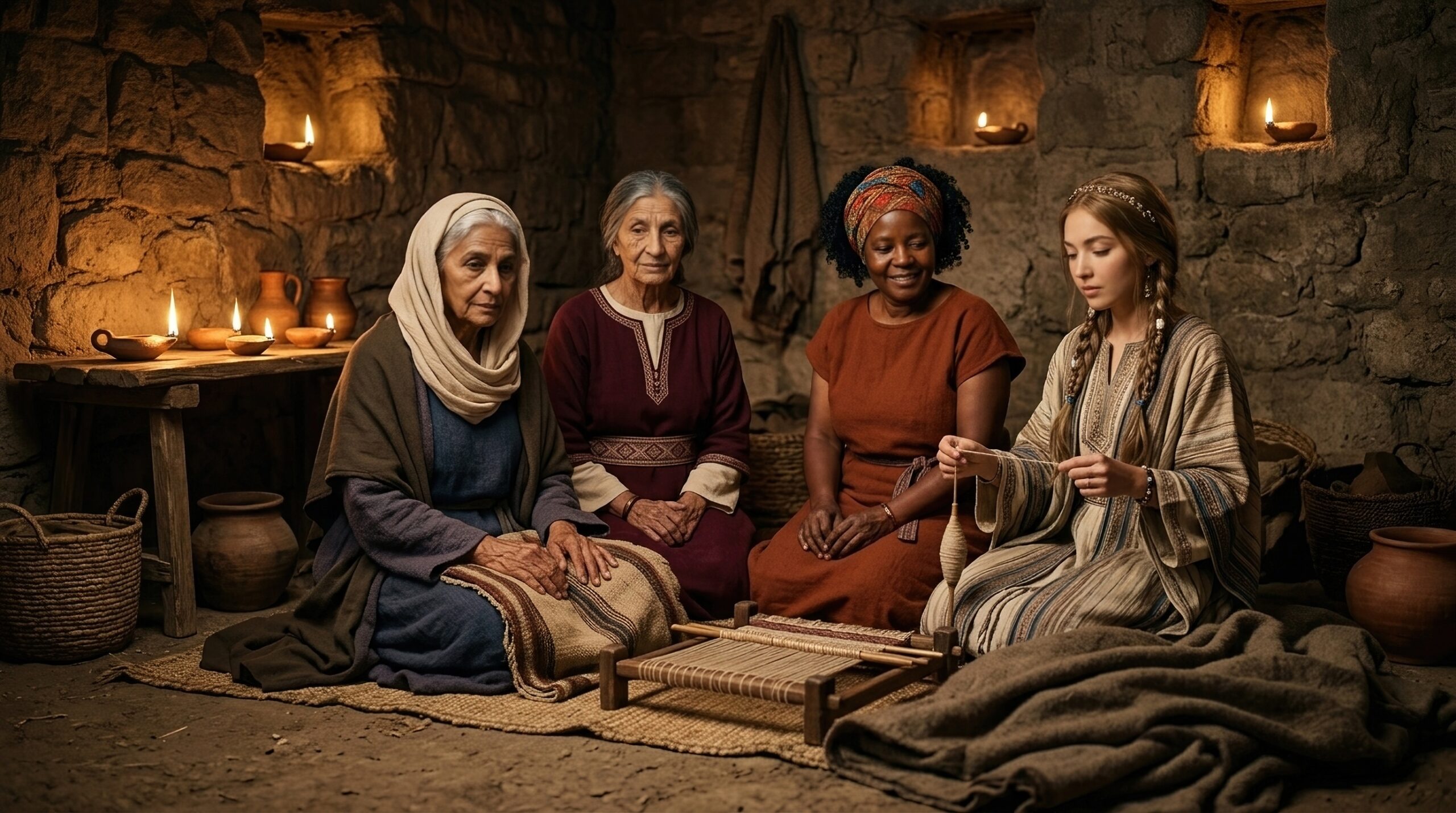
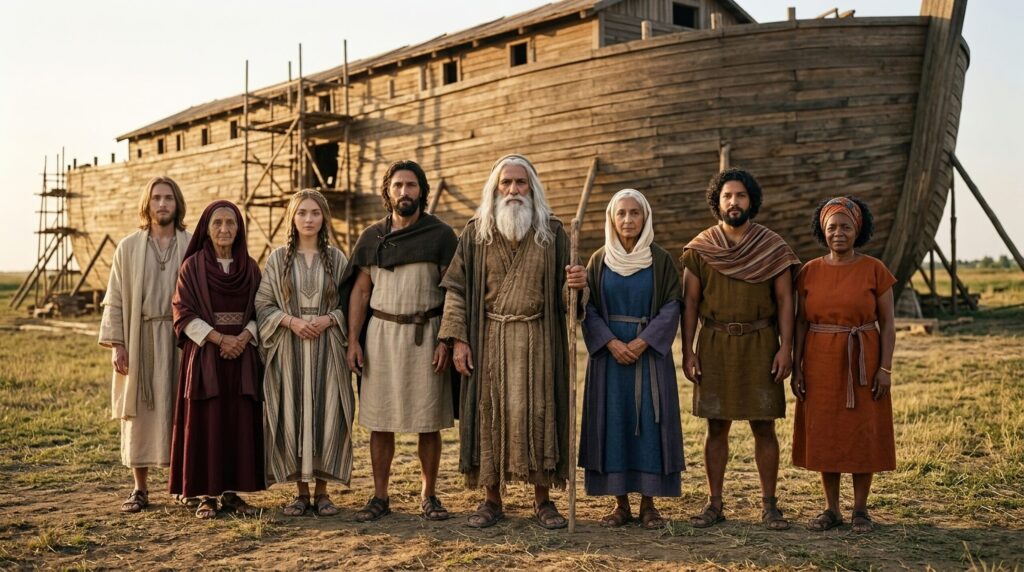
Genesis 6–9 records the Flood as an act of divine judgment and covenantal preservation. God chose Noah — “righteous in his generation” (Gen. 6:9) — and established His covenant with him and his household (Gen. 6:18). Eight people entered the Ark. Eight people survived (1 Pet. 3:20). Yet Scripture names only Noah and his sons. Their wives — four women who crossed the threshold between the old world and the new — remain without names, without lineages, without recorded voices. This video examines that silence. It draws on the canonical text alongside ancient traditions — the Book of Jubilees, the Genesis Apocryphon, and early Jewish and Christian writings — to ask what God may be saying through what He chose not to say. The answer reshapes the Flood from a story about destruction into a testimony about preservation.
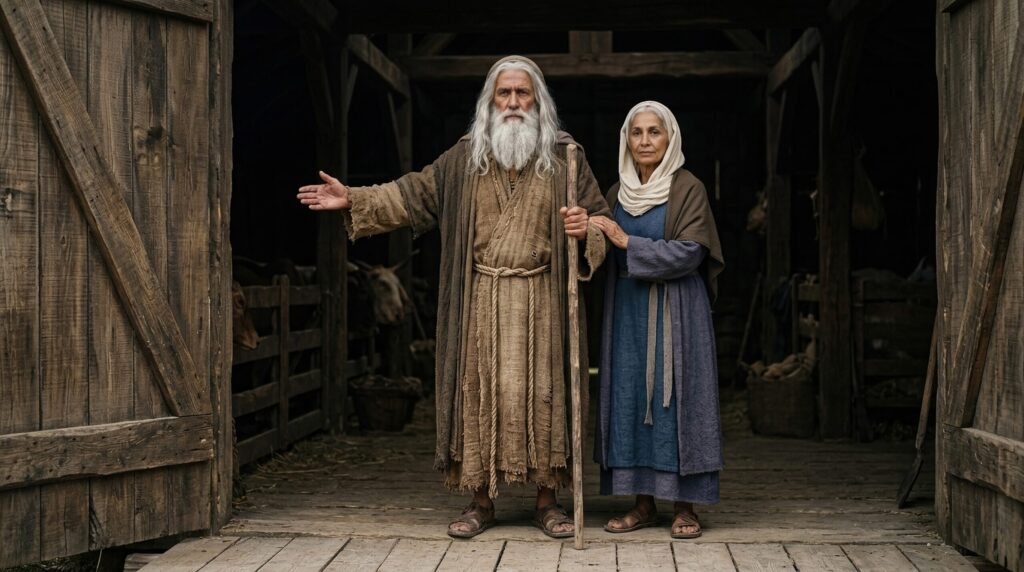
Lesson 1 — God Preserved More Than Bodies
Core idea: The Ark carried not only eight lives but also the memory, faith, and knowledge of the pre-Flood world. God’s act of preservation was never merely biological. It was covenantal and cultural.
In the narrative: God’s covenant in Genesis 6:18 explicitly includes “your sons’ wives” — not as afterthoughts, but as named participants in the plan. The video argues that these women carried oral tradition, practices, and the knowledge of the true God through the waters. The Genesis Apocryphon describes them as “guardians” — not just survivors. Their role inside the Ark was to ensure that what could not be engraved in stone would still be transmitted.
Practical application: Ask yourself what you are actively preserving and transmitting to the next generation. This is not about producing theological content. It is about whether the people in your home can articulate who God is and what He has done. Choose one biblical narrative this week and tell it to someone younger — a child, a new believer, a neighbor. Not because it is interesting, but because transmission is faithfulness.
“When the waters receded, they were there — silent, yet essential.”
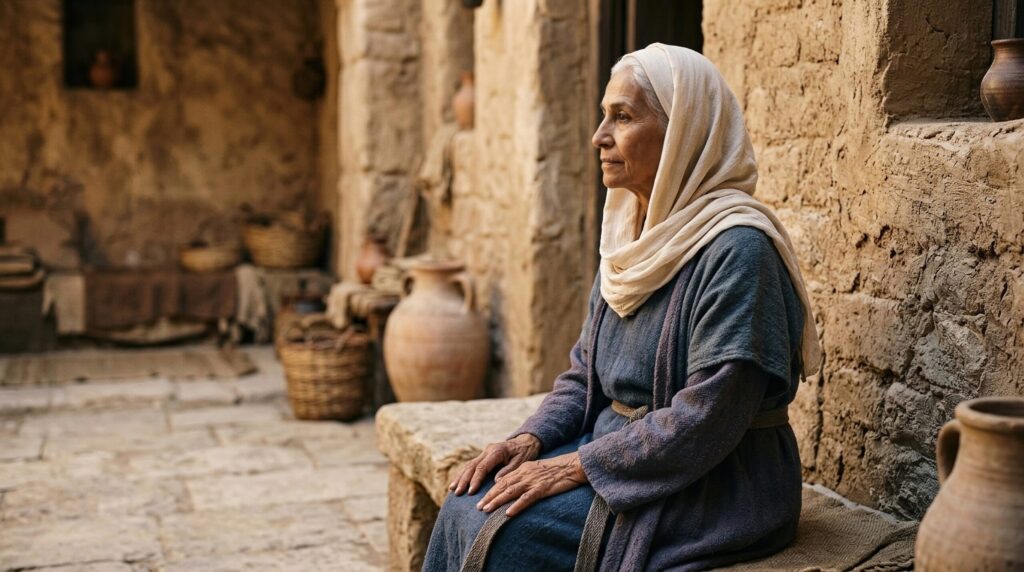
Lesson 2 — Divine Silence Is Not Divine Absence
Core idea: When Scripture withholds a name or a story, it is not careless. God’s silence in the text is never the same as God’s absence in history. These women mattered to the plan whether or not they were named in the record.
In the narrative: The video makes this point directly: “When the Bible is silent… it is not always absence. Sometimes… it is mystery.” Genesis is meticulous about genealogies (Gen. 5; Gen. 10), yet it withholds the identities of the four women on the Ark. First Peter 3:20 counts all eight souls saved through the waters. That number includes the women. God counted them. He simply did not publish their names.
Practical application: You may feel unrecorded — faithful in tasks no one tracks, carrying responsibilities no one narrates. The Flood account challenges you not to confuse visibility with value. Read Hebrews 11:32–40 this week, paying attention to those named “by faith” and those described only as unnamed people who “were tortured” or “wandered.” God keeps a fuller record than we do. Pray specifically for the unnamed faithful people in your own life and congregation.
Lesson 3 — Covenant Reaches the Whole Household
Core idea: God’s covenantal grace in Genesis 6:18 was not limited to the man He called. It extended to his sons and their wives. God’s saving purposes move through families — but that does not mean everyone in a household shares the same faith automatically.
In the narrative: The video raises the question directly: Did the daughters-in-law share Noah’s faith, or were they transformed by what they witnessed? The uncertainty about whether they descended from Seth’s line or Cain’s is not resolved. This means that the Ark may have carried within it “an invisible tension” — two distinct lineages, two different spiritual histories. God preserved them all. He did not wait for theological uniformity.
Practical application: If you live in a household where faith is not shared equally, Genesis 6:18 is not a guarantee of everyone’s salvation — but it is a testimony that God uses covenantal structures to bring people through judgment who might not have entered otherwise. Pray for the unbelieving members of your household by name. Do not reduce that prayer to a formula. Ask God to make His covenant visible to them through the ordinary faithfulness they observe in you.
Lesson 4 — Rebuilding Requires Witnesses, Not Just Survivors
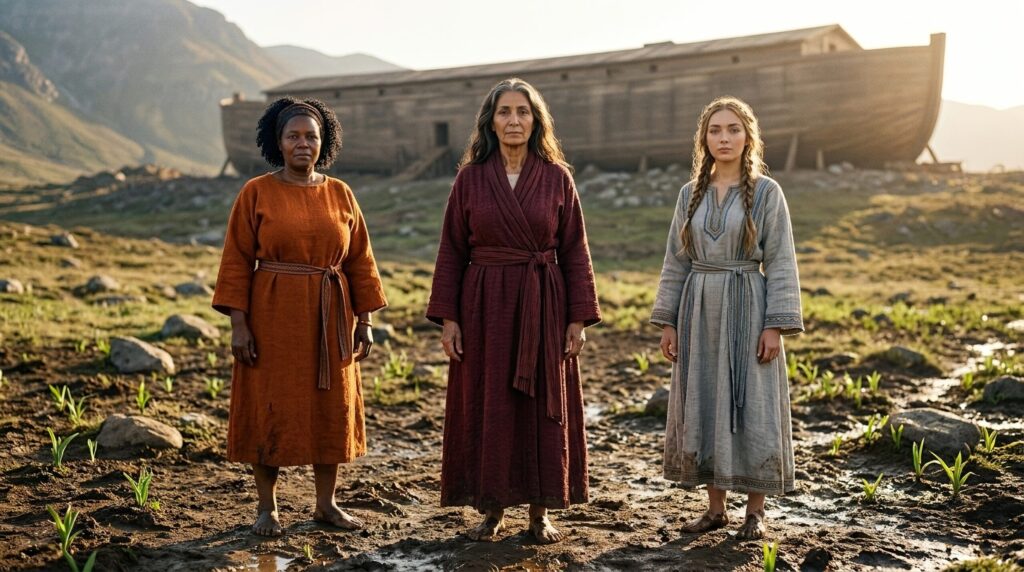
Core idea: After judgment, survival is not enough. Someone must remember what came before, interpret what happened, and teach the next generation what it means. These women were not just survivors — they were the first teachers of the post-Flood world.
In the narrative: When the Ark grounded on dry land, the women faced what the video describes as a world with “no cities, no structures, no references.” The Book of Jubilees presents figures like Sedqetelbab, wife of Shem, as ancestors of entire Semitic peoples — not merely through childbirth but through the transmission of values, identity, and memory. Naeltamauk, wife of Ham, is linked to African nations through her sons (Cush, Mizraim, Put, Canaan — Gen. 10:6). Adataneses, wife of Japheth, is the root behind peoples who would become Greeks, Celts, and Germanic tribes (Gen. 10:2–4). These were not passive presences. They were foundational.
Practical application: The church is always one generation away from forgetting. Ask yourself what teaching role you fill — not as a title, but as a practice. Who is learning the Scriptures because of your presence? This week, open Genesis 8–9 and read the covenant with Noah. Then identify one specific truth from that text that you have never explicitly communicated to someone in your circle. Communicate it. Not as a lecture — as a witness.
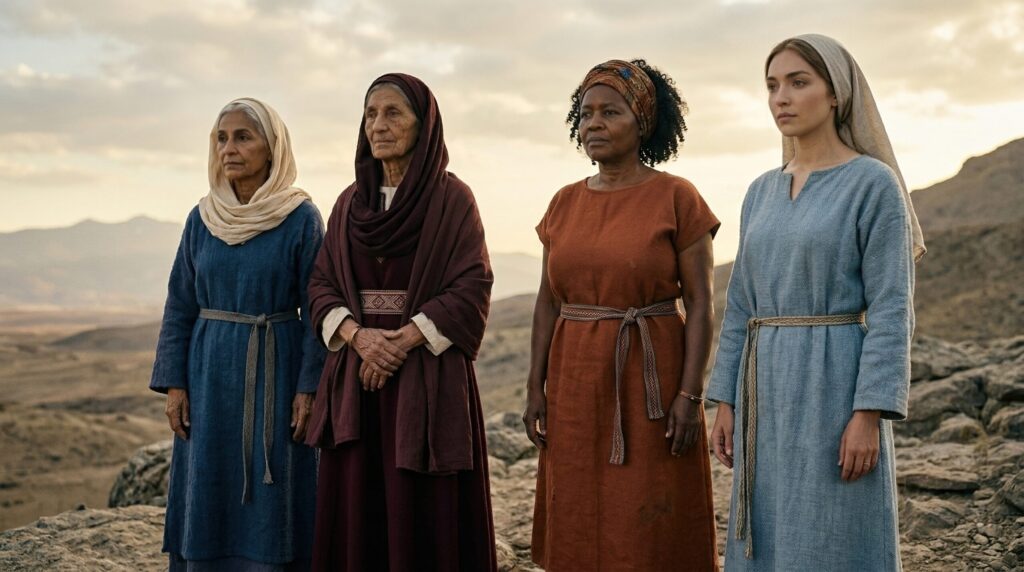
The silence around the women of the Ark is not an editorial oversight. It is a window into how God works. He makes covenants with households, not only individuals (Gen. 6:18). He counts every soul preserved, even the unnamed ones (1 Pet. 3:20). He builds civilizations through people history does not spotlight. These four lessons converge on a single point: God’s redemptive plan is always larger than the names we remember. The Flood did not merely end the old world — it transferred everything necessary for the new one through eight people, half of whom Scripture never names. That should change how you read every genealogy, every unnamed figure, every silent presence in the biblical narrative.
This week, take three steps:
First, read Genesis 6:9–22 and 9:1–17 in one sitting — the call, the covenant before the Flood, and the covenant after. Pay attention to who is addressed and who is included.
Second, spend ten minutes in prayer asking God to show you whose faithfulness He is working through right now that you have been overlooking — in your home, your church, or your community.
Third, make one concrete decision: identify one person in your life who is carrying a God-given responsibility in silence. Name it to them. Tell them you see it. Faithfulness does not require recognition — but it is strengthened by it.
Test your biblical knowledge with this amazing quiz!
SCRIPTURE REFERENCES AND CONTEXT
Passages cited in the script:
- Genesis 6:9 — Establishes Noah as “righteous in his generation,” the basis for his selection and the covenantal premise of the entire narrative.
- Genesis 6:18 — God’s direct command to Noah to bring his wife and his sons’ wives into the Ark; the foundational text for the video’s argument that these women were not incidental.
- 1 Peter 3:20 — Confirms that eight souls were saved through the waters; used in the video to demonstrate that the women were counted by God even without being named.
- Genesis 10:2–4 (implied) — Table of Nations listing Japheth’s sons (Gomer, Magog, Madai, Javan, Tubal, Meshech, Tiras), used to trace Adataneses’s legacy through the peoples of Europe and Asia.
- Genesis 10:6 (implied) — Ham’s sons (Cush, Mizraim, Put, Canaan), used to trace Naeltamauk’s legacy through African and Near Eastern nations.
Additional cross-references (not from the script):
- Hebrews 11:32–40 — The “hall of faith” includes both named and unnamed people commended for faithfulness. Reinforces the video’s point that God’s record is fuller than Scripture’s explicit narrative.
- Genesis 5:1–32 — The genealogy from Adam to Noah, demonstrating how carefully Genesis preserves names when it chooses to. The silence about the women’s names in chapters 6–9 is therefore deliberate, not accidental.
- Luke 17:26–27 — Jesus references Noah’s days to describe the suddenness of divine judgment. The ordinariness of life — eating, drinking, marrying — echoes the video’s description of Naeltamauk baking bread when the Flood began.
Theological concepts used in the script:
- Covenant (berith): A binding divine commitment, here established in Genesis 6:18 between God and Noah’s entire household. Unlike a contract, a covenant in Scripture is unilateral from God’s side — He initiates, defines, and upholds it. The Flood narrative establishes the Noahic covenant as the framework for all of post-Flood history.
- Typology: The interpretive pattern in which an Old Testament person, event, or institution foreshadows a New Testament reality. The Ark functions typologically in 1 Peter 3:20–21 as a prefiguration of baptism — passing through water as an act of divine preservation and new beginning.