

“What causes quarrels and what causes fights among you? Is it not this, that your passions are at war within you?”
James 4:1 (ESV)
When Home Feels Like a Battlefield
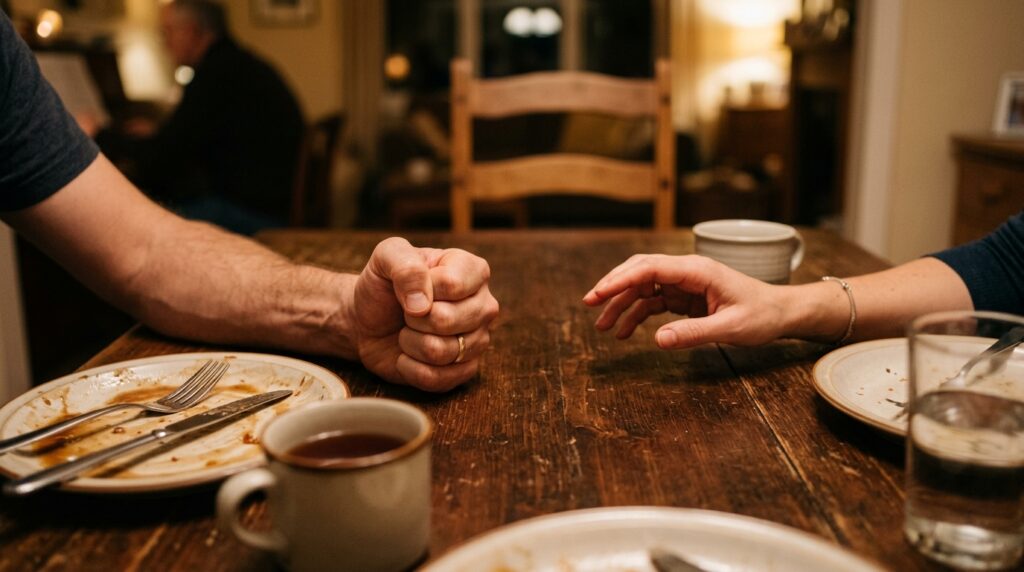
Some of the deepest wounds we carry do not come from strangers, but from people who share our last name. A house that was meant to be a refuge can, in some seasons, feel more like a battlefield—sharp words in the kitchen, cold silence at the table, slammed doors and unspoken resentments.
The Bible does not pretend that families always live in harmony. From Cain and Abel to Joseph and his brothers, to the tensions around Jesus’ own ministry, Scripture is honest about siblings who hurt each other, parents and children who misunderstand each other, and homes where love and conflict co‑exist. The question is not whether conflict will ever appear, but what we do when it does.
When we are in the middle of family tension, it is easy to think the main problem is simply “the other person.” James 4 invites us to look deeper—to ask what is happening beneath our words, in the quiet places of the heart where our desires and expectations collide.
James 4 and the War Beneath Our Words
James begins with a question many of us avoid: “What causes quarrels and what causes fights among you?” Then he answers it bluntly: “Is it not this, that your passions are at war within you?” (James 4:1). According to James, family conflict is not only about circumstances or personalities; it is also about desires that have quietly taken the throne in our hearts.
He goes on: “You desire and do not have, so you murder… You covet and cannot obtain, so you fight and quarrel” (James 4:2). Most of us are not literally committing murder in our homes. But we do know what it means to let anger “kill” a conversation, or to stab with a sentence we know will hurt. Underneath, there is often a good desire turned into a ruling demand: to be respected, to be heard, to be obeyed, to be understood on our terms.
James is not saying that every complaint is selfish or that we must ignore real sin and abuse. He is saying that, in normal family tensions, there is usually more happening inside us than we first admit. When we let our desires become ultimatums—“I must have this my way”—we turn family members into obstacles instead of gifts. The war in the living room often begins with a war in the heart.

Owning My Part Before Pointing at Yours
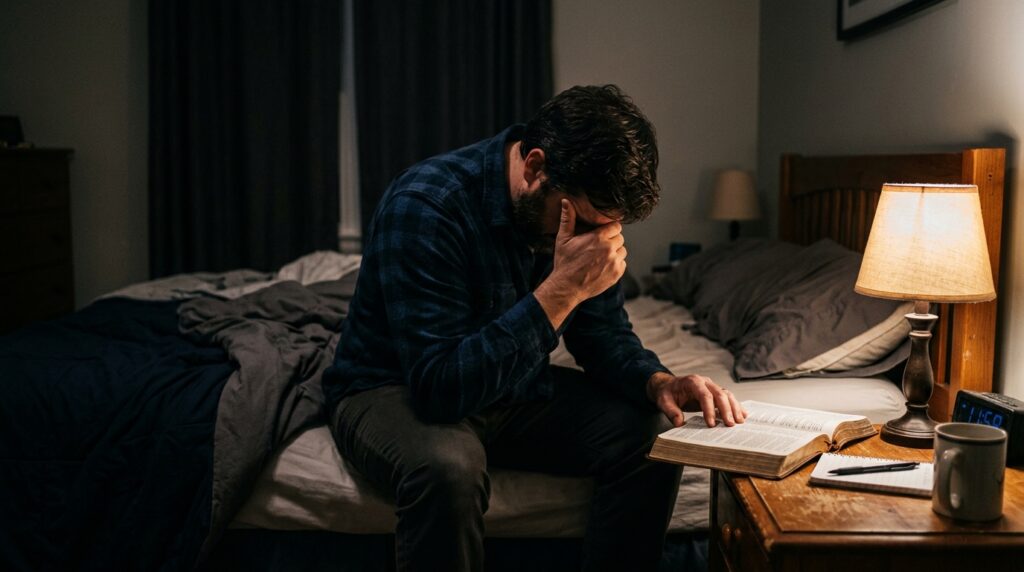
If James 4 is true, reconciliation in the family does not begin with better arguments. It begins with honest self‑examination. Before listing all the ways our relatives have failed us, Scripture calls us to ask hard questions about ourselves: What am I demanding? Where am I refusing to bend? Have my words reflected Christ, or only my frustration?
Jesus spoke of taking the log out of our own eye before addressing the speck in our brother’s (Matthew 7:3–5). That does not mean we never confront sin in others. It means we refuse to do it from a place of self‑righteousness. In family conflicts, this might sound like, “Before we talk about what hurt me, I need to admit how I have also contributed to the tension.”
Owning our part does not erase the wrongs of others, but it changes the tone of the conversation. It lowers our voice. It opens the door for humility on both sides. And even if the other person does not respond as we hope, this posture keeps our own heart from growing bitter and hard.
“As Far as It Depends on You”
Romans 12:18 offers a realistic but challenging word: “If possible, so far as it depends on you, live peaceably with all.” Paul knows that peace is not always possible. Some family members may not be willing to talk, to listen, or to change. Yet he still places a clear responsibility on us: do what you can, from your side, to pursue peace.
In practice, this may look like taking the initiative to schedule a conversation instead of waiting indefinitely. It may mean preparing your heart in prayer, coming not to win but to understand and to be honest. It may involve a simple but costly sentence: “I’m sorry for how I spoke to you,” or, “I was wrong to let this resentment grow.”
“As far as it depends on you” is both freeing and sobering. It acknowledges that you cannot control someone else’s response, but it also refuses to let us hide behind their resistance as an excuse for our own hardness. We are called to be ready for reconciliation, even when the door has not yet fully opened.

Choosing to Forgive in a House of Imperfect People
Ephesians 4:31–32 calls believers to put away bitterness, wrath, and slander, and to “be kind to one another, tenderhearted, forgiving one another, as God in Christ forgave you.” In the context of family, this is one of the hardest commands. Our relatives know our history. Old wounds resurface easily. Forgiveness can feel like letting someone “get away” with what they did.
Biblical forgiveness is not pretending the hurt did not matter. It is choosing, sometimes again and again, to release the desire for revenge and to seek the other person’s good, even if trust must be rebuilt slowly. It does not erase consequences or boundaries, especially in cases of serious harm. But it does refuse to let bitterness write the final chapter of the story.
In a house of imperfect people, reconciliation will not always look like a perfect happy ending. Sometimes it will be small steps: a softer tone, a willingness to be in the same room again, a shared meal after a long silence. Each of these is a quiet miracle of grace. They remind us that the same God who reconciled us to Himself in Christ is able to begin healing what feels irreparably broken at our own table.
BIBLE REFERENCES
James 4:1–3 (ESV); Romans 12:18 (ESV); Ephesians 4:31–32 (ESV)