

“For I consider that the sufferings of this present time are not worth comparing with the glory that is to be revealed to us.”
Romans 8:18 (ESV)
The Tension Between Present Suffering and Future Glory
Romans 8:18 opens with a striking comparison: “the sufferings of this present time” on one side, and “the glory that is to be revealed” on the other. Paul does not deny the reality of suffering. He does not call it an illusion or a minor inconvenience. Instead, he acknowledges it fully—and then places it in the scale beside something even weightier.
If we are honest, our instinct is often to reverse the order. We see our present pain in high definition and our future hope as a vague, blurry idea. Paul is inviting us to flip that focus. He wants us to see that whatever is heavy now is not the heaviest thing in the story. There is a coming glory so solid, so substantial, that when it finally appears, the scale will tip decisively in its favor.
This is not a call to pretend that loss, sickness, injustice, or global crisis do not hurt. It is a call to let the promised future reshape how we carry the weight of the present. Hope does not erase suffering, but it refuses to let suffering have the final word.
Creation’s Long, Deep Groan
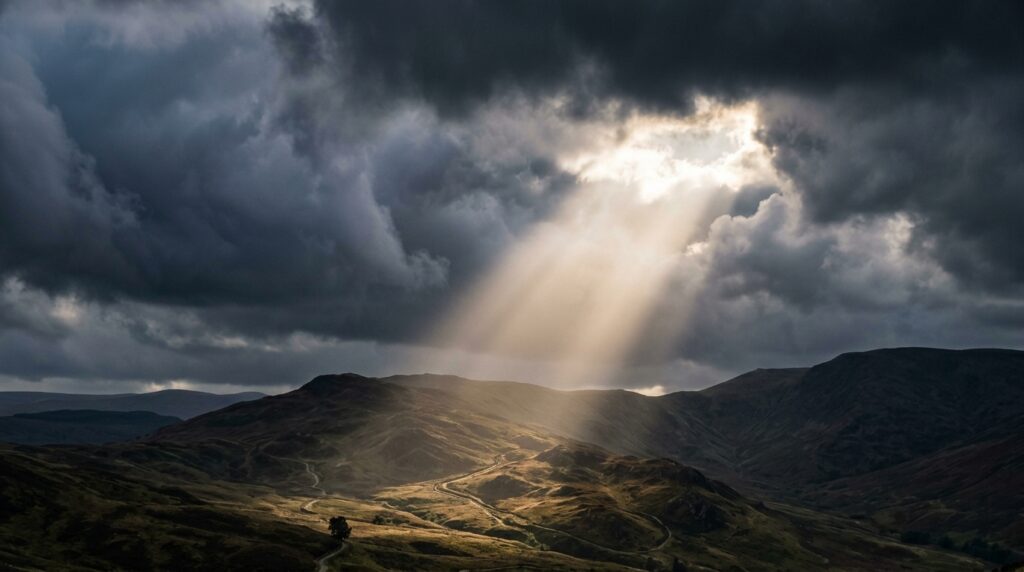
In verses 19–22, Paul turns our attention outward, beyond our own hearts, to the world around us. He describes “the creation” as waiting with eager longing for the revealing of the children of God, subjected to futility, in bondage to decay, and “groaning together in the pains of childbirth until now.” This is one of the most vivid pictures in the New Testament of a universe that is not at rest.
We live in a world of beauty and brokenness. We see mountains and sunsets, but also storms that destroy and seasons that no longer behave as expected. Romans 8 suggests that this instability is not random. Creation itself has been dragged into the consequences of human rebellion. It was “subjected to futility,” not by its own choice, but in hope that one day it would be freed.
Test your biblical knowledge with this amazing quiz!
The language of “groaning” is important. These are not the final cries of a world dying, but the labor pains of a world that will be reborn. Paul is not describing a universe destined only for destruction, but one that will be liberated and renewed when God’s children are revealed in glory. Creation’s long, deep sigh is pulling toward a future that God has already promised.
Our Groaning: Waiting for What We Cannot Yet See
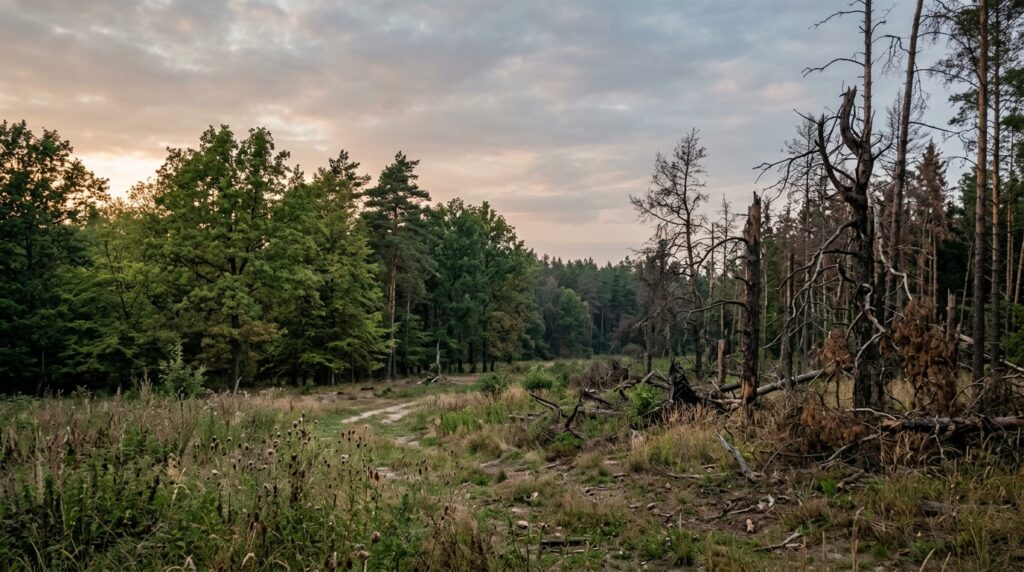
Paul does not stop with creation. In verse 23 he adds, “And not only the creation, but we ourselves… groan inwardly as we wait eagerly for adoption as sons, the redemption of our bodies.” The same word is used: groaning. It is the language of longing, of a heart that knows things are not yet as they should be, even after we have come to Christ.
We groan because we live in the tension between “already” and “not yet.” Already forgiven, but not yet free from every trace of sin. Already adopted, but not yet experiencing the full redemption of our bodies. Already belonging to a new creation, but still walking through the ruins of the old. The Spirit inside us awakens a desire for a world we have not yet seen.
This kind of groaning is not a lack of faith. It is a sign of faith. We groan because we have tasted something of the age to come and feel more sharply how far the present age falls short. We are not called to silence these longings, but to bring them into honest prayer, trusting that the God who hears the cries of creation also hears the quiet ache of His children.

Hope That Learns to Breathe in the Dark
Verses 24–25 bring the theme into focus: “For in this hope we were saved. Now hope that is seen is not hope… But if we hope for what we do not see, we wait for it with patience.” The kind of hope Paul describes is not optimism built on visible improvements. It is a hope that learns to breathe in the dark, anchored not in what we can measure, but in what God has promised.
This means there will be seasons when circumstances give us very little reason to feel hopeful. The headlines may grow worse. Our own bodies may weaken. Creation’s groan may feel louder. In those moments, the New Testament does not ask us to manufacture positive feelings. It asks us to remember that our hope is tied to an event that has already begun: the death and resurrection of Jesus, and the gift of the Spirit as the “firstfruits” of what is coming.
Hope, in Romans 8, is not a fragile wish. It is a settled direction. It looks back to the cross and forward to the restoration of all things, and then chooses to keep walking, even when the path is dim. It is less like a bright spotlight and more like a steady, quiet flame that keeps burning when the wind rises.

Living as People of the Not‑Yet
How, then, do we live in a world where both creation and our own hearts are groaning? Romans 8 does not give us a list of techniques. Instead, it gives us a way of seeing. We recognize that our present sufferings are real but not ultimate. We acknowledge that creation is not yet what it will be, and that our own lives are unfinished stories being carried toward glory by the hand of God.
Living as people of the “not‑yet” means refusing two extremes. We do not sink into despair, as if the groaning were all there is. Nor do we retreat into denial, pretending that nothing is broken. We let our hearts feel the weight of the world’s pain and our own, and then we keep coming back to the quiet conviction that “the glory that is to be revealed” will not disappoint those who wait.
In the end, Romans 8:18–25 invites us to walk with a hopeful limp. We move forward with eyes open to the cracks in creation and in ourselves, but we do not walk alone. The Spirit walks with us. Creation’s groaning surrounds us. And somewhere ahead, beyond what we can yet see, glory is already on its way.
BIBLE REFERENCES
Romans 8:18–25 (ESV)