
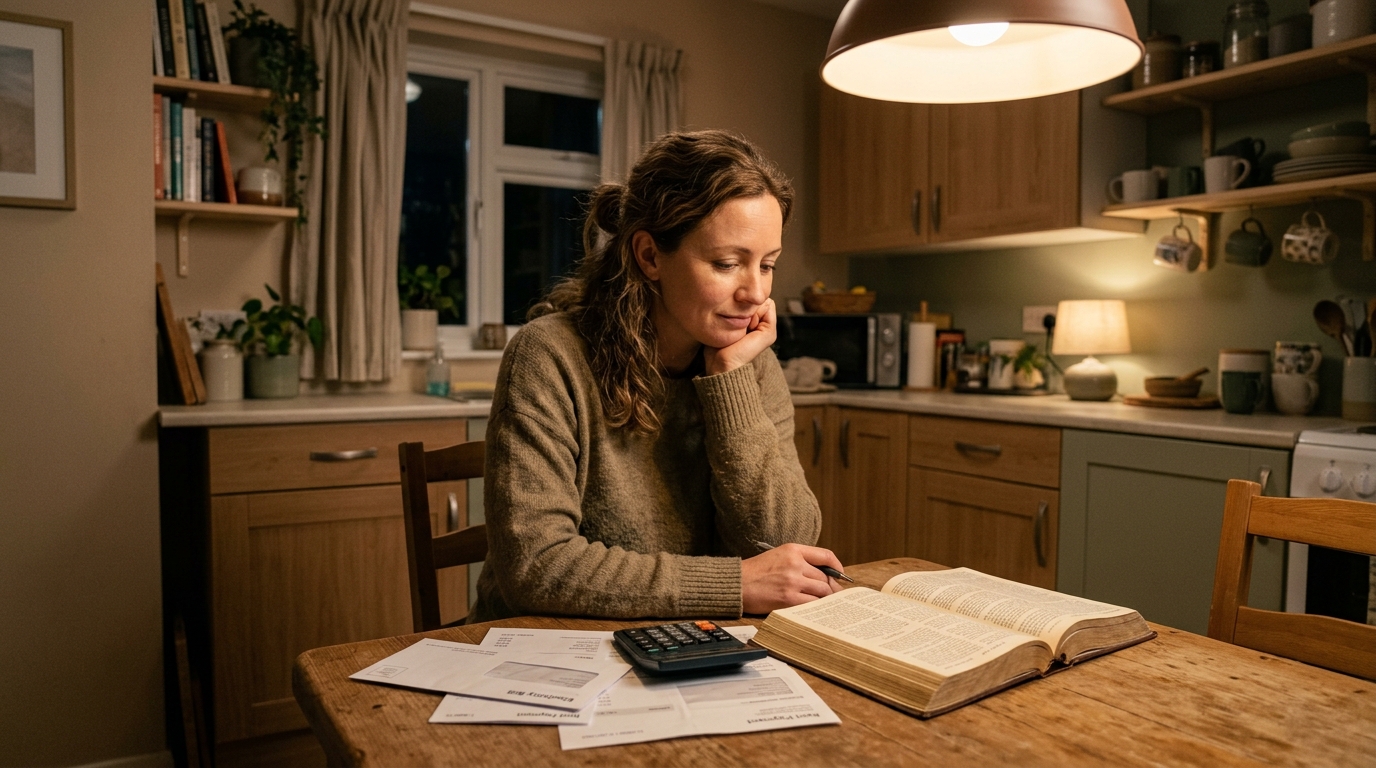
Economic news can feel like a constant storm: markets dip, prices rise, jobs feel less secure, and headlines warn of crisis. When this happens, money fear often moves from the background to the foreground of our thoughts. Jesus knew that financial anxiety would be one of the great rivals to trust in God, which is why He spoke so directly about it in Matthew 6.
This article is not about quick financial fixes or detailed investment strategies. It is about the inner posture of a disciple in unstable times: learning to live simply, steward wisely, and trust deeply, even when you feel the tremors of an uncertain economy.
When Money Fear Gets Loud
For many adults, economic instability translates into very concrete questions: Will I be able to pay my bills? What if I lose my job? What happens to my savings if the markets drop again? These questions are not imaginary; they touch real responsibilities and real people we love.
The Bible does not dismiss these concerns or tell us to pretend money does not matter. It acknowledges that we need food, clothing, and shelter. What it challenges is the belief that our ultimate security rests on what we can earn, save, or predict. When fear gets loud, it often reveals where we have quietly begun to treat money as our refuge instead of God.
Recognizing money fear is not a failure of faith; it is an invitation. It is an opportunity to bring our worry into the open before God and to let His Word reshape our instincts about provision, security, and enough.

What the Bible Actually Says About Money and Security
Jesus tells His followers not to “lay up for yourselves treasures on earth” as if that were the ultimate good, because earthly treasures are fragile, and hearts attach themselves wherever treasure lies (Matthew 6:19–21). Instead, He commands us not to be anxious about our life—what we will eat, drink, or wear—because our Father knows what we need.
Elsewhere, Scripture cautions against both greed and misplaced confidence in wealth. Paul warns that those who desire to be rich fall into many temptations and pierce themselves with many pangs (1 Timothy 6:9–10), while also instructing the wealthy not to set their hope on riches, “which are so uncertain, but on God, who richly provides us with everything for our enjoyment” (1 Timothy 6:17).
The consistent message is this: work diligently, handle money wisely, but anchor your hope in God alone. Economic conditions will rise and fall. Christ’s care for His people does not.
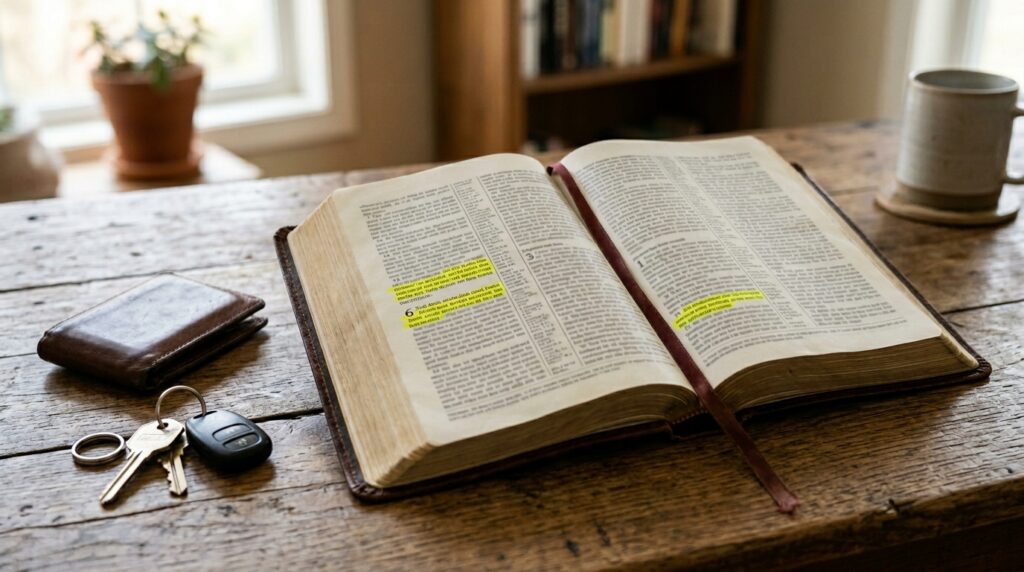
Choosing Simplicity Over the Pressure to Keep Up
One quiet way to push back against money fear is to embrace simplicity. Much of our anxiety comes not only from what we truly need, but from the pressure to maintain a certain lifestyle, image, or pace of consumption. Simplicity is not poverty for its own sake; it is the intentional choice to live with less so that you can be freer to follow Christ and to love others.
This can look like living below your income when possible, resisting constant upgrades, saying no to some “good” opportunities that would stretch you too thin, and finding contentment in modest surroundings. Paul could say, “I have learned in whatever situation I am to be content… I know how to be brought low, and I know how to abound” (Philippians 4:11–12).
Simplicity is a form of quiet rebellion against a culture that equates worth with wealth. It creates space—financial and emotional—for generosity, margin, and rest. And it gently loosens fear’s grip, because you are no longer building your identity on having “what everyone else has.”

Practicing Wise Stewardship Without Bowing to Fear
Trusting God with money does not mean ignoring budgets, avoiding savings, or refusing to plan. Proverbs commends diligent planning and foresight, and multiple passages point to the wisdom of setting something aside for the future while remembering that God is the ultimate provider.
In shaky economic times, many Christian financial voices encourage a few simple principles: spend less than you earn, avoid unnecessary debt, build some margin or emergency savings if you can, and seek wise counsel when decisions feel complex. These are not about hoarding out of fear; they are about stewarding what God has entrusted to you with humility and prudence.
The key difference is the heart posture. Wise stewardship says, “Lord, all of this is Yours. Help me manage it in a way that honors You.” Fear‑driven control says, “If I do not hold tightly enough, everything will fall apart.” The first leads to peace and open hands; the second leads to exhaustion and anxiety.

Keeping Your Hands Open: Generosity in Lean Times
One of the clearest signs that money fear is losing its power is the ability to stay generous even when circumstances are uncertain. Scripture consistently calls believers to give, not only out of abundance, but also in seasons of hardship, trusting that God can supply what is needed.
This does not mean reckless giving that ignores real obligations, but rather a posture that refuses to let scarcity turn the heart inward. Setting aside a planned amount—even a small one—for kingdom work and for those in need is an act of defiance against the lie that we are ultimately alone in providing for ourselves.
Generosity is not only a blessing to others; it is medicine for our own souls. It re‑teaches us that God is our source, not our paycheck. It reminds us that we are part of a body where our surplus can ease someone else’s lack, and where, in another season, we may be the ones receiving help.
Learning to Trust the Provider More Than the Provision
At the heart of money fear lies a question: “Will there be enough?” The deeper biblical question is, “Who is my provider?” Jesus points to birds that do not stockpile and flowers that do not strategize, yet are fed and clothed by the Father. “Are you not of more value than they?” He asks (Matthew 6:26).
Choosing to trust God as provider does not mean passivity. It means doing what you can—working, planning, seeking counsel—while refusing to carry what only He can carry. It looks like regularly telling Him, “You know what I need. You know what my family needs. Teach me to be faithful with what I have, and help me rest in Your care.”
Over time, as you see His faithfulness in large and small ways, your confidence shifts from numbers on a page to the character of a Person. The economy may continue to shake. Your heart does not have to.

BIBLE REFERENCES
Matthew 6:19–34 (ESV); 1 Timothy 6:6–10, 17–19 (ESV); Philippians 4:11–13, 19 (ESV); Proverbs 21:5 (ESV); Hebrews 13:5 (ESV)