

Headlines shift, economies shake, relationships strain, and plans change. Many adults feel as if the ground beneath their feet is always moving. Philippians 4:1–9 was written to believers in a world no less unstable than ours, and it offers a series of simple but profound keys for staying spiritually steady when everything around us seems uncertain.
Spiritual stability does not mean a trouble‑free life or a perfectly calm personality. It means learning, by grace, to stand firm in Christ when circumstances, emotions, and news cycles pull you in different directions. It is not about becoming unfeeling; it is about being deeply rooted.
What Spiritual Stability Is—and Is Not
To be spiritually stable is to be anchored in who God is and what He has promised, rather than tossed about by every new pressure or fear. Scripture uses images like a tree planted by streams of water, or a mind kept in perfect peace because it is stayed on God. Stability is not the absence of storms; it is the presence of deep roots and a solid foundation.
Stability is not the same as denial. Stable Christians still feel grief, disappointment, and concern. They still make decisions and face uncertainty. The difference is that these experiences do not define them or dictate their responses. Their hearts return, again and again, to the unchanging character of God.
Philippians 4:1–9 outlines seven keys that help us move toward that kind of life. These are not instant fixes, but ongoing, practical ways to let God steady us in an unstable world.
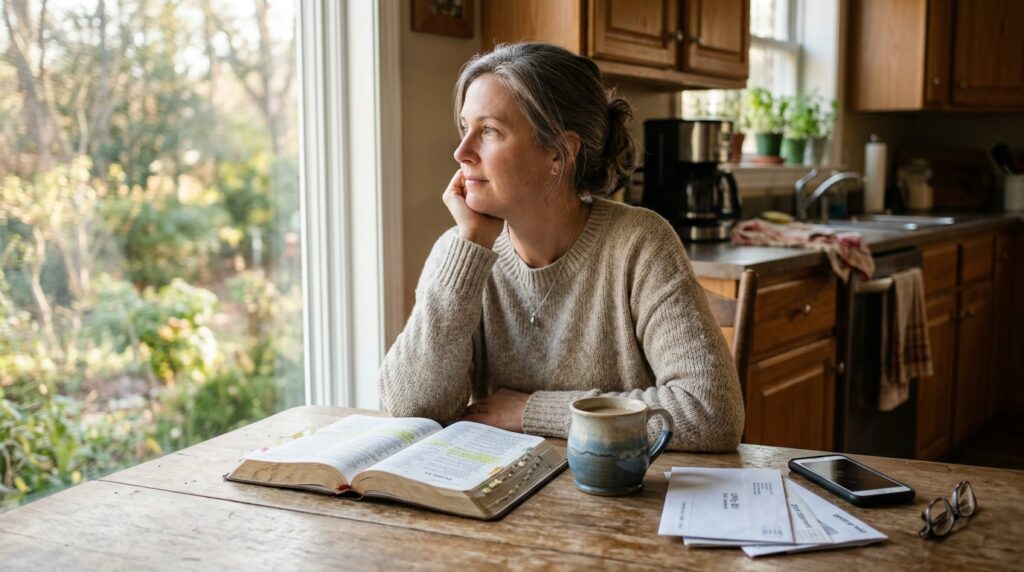
Key 1: Stand Firm in the Lord, Not in Yourself
Paul begins, “Therefore, my brothers, whom I love and long for, my joy and crown, stand firm thus in the Lord, my beloved” (Philippians 4:1). The command is not simply “stand firm,” but “stand firm in the Lord.” Our stability does not come from inner strength, but from a strong Savior.
Many of us try to stand firm in our own plans, savings, health, or reputation. When any of those shake, we shake with them. Learning to stand firm in the Lord means consciously shifting our weight onto Him—returning, day after day, to His Word, His character, and His promises as our true footing.
A simple question to ask in unstable seasons is: “What am I really standing on right now?” Bringing that answer honestly before God is often the first step toward deeper stability.

Key 2: Pursue Unity Instead of Feeding Division
In Philippians 4:2–3, Paul pleads with two women in the church—Euodia and Syntyche—to agree in the Lord, and he asks others to help them. He knows unresolved relational conflict undermines stability. When believers are at odds, hearts become unsettled and distracted.
In our time, disagreements—especially about politics, culture, or preferences—can quickly fracture relationships at home and in the church. Spiritual stability grows when we refuse to let secondary issues become ultimate, when we seek reconciliation where possible, and when we choose to remember that our deepest unity is in Christ, not in identical opinions.
This does not erase real differences or require pretending nothing is wrong. It does mean examining whether we are clinging more tightly to personal agendas than to the call to “agree in the Lord” where Scripture clearly unites us.
Key 3: Practice Joy That Doesn’t Depend on Circumstances
“Rejoice in the Lord always; again I will say, rejoice” (Philippians 4:4). Paul writes this from prison, not from comfort. His call is not to ignore hardship, but to remember that there is always a reason for joy in the Lord Himself—His presence, His salvation, His promises—no matter what changes around us.
This kind of joy is a practice, not just a feeling. It may look like intentionally naming specific reasons to thank God each day, singing truth when you do not feel it yet, or sharing stories of His faithfulness with others. Joy in the Lord functions like ballast in the hull of a ship: it adds weight that keeps you from capsizing.
The more we learn to rejoice in who God is, rather than only in what He gives, the less our emotional state rises and falls with each change in our circumstances.

Key 4: Let Gentleness Mark Your Reactions
“Let your reasonableness [gentleness] be known to everyone. The Lord is at hand” (Philippians 4:5). In unstable times, harshness and overreaction often feel normal. But Paul links stability with a gentle, patient posture toward others, grounded in the awareness that the Lord is near.
Gentleness does not mean weakness or passivity; it means strength under control. It looks like a measured tone instead of a sharp one, a slower response instead of a quick explosion, a willingness to listen instead of to dominate. As we remember that God is close and in control, we are freed from the need to control every interaction ourselves.
When our default reactions become softer, our inner life often becomes steadier, too. Angry responses may feel powerful in the moment, but they usually leave our hearts more agitated.
Key 5: Trade Anxiety for Prayer and Gratitude
“Do not be anxious about anything, but in everything by prayer and supplication with thanksgiving let your requests be made known to God,” Paul writes, “and the peace of God… will guard your hearts and your minds in Christ Jesus” (Philippians 4:6–7). The alternative to being ruled by worry is not denial, but honest, thankful prayer.
Stability does not mean we never feel anxious; it means we do not let anxiety have the final word. Each worry can become a cue to pray: “Lord, here is my concern. Here is what I fear. I place it in Your hands. Thank You that You are near and that You care.” Over time, this repeated exchange—worry for prayer and gratitude—trains the heart to lean on God instead of on imagined worst‑case scenarios.
The promise is not that every circumstance will change quickly, but that God’s peace will stand guard over our hearts and minds like a sentry, even while the situation remains unresolved.
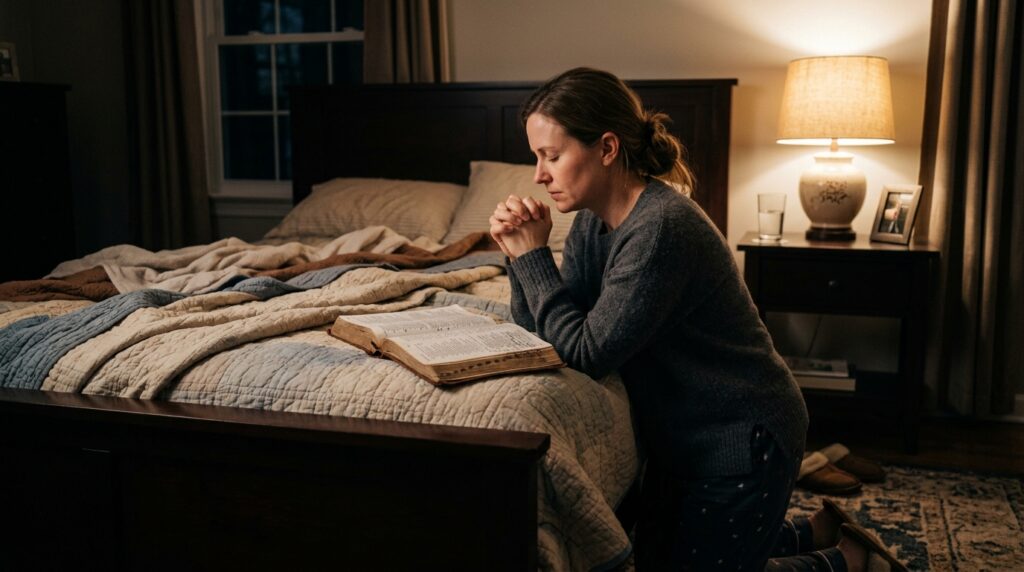
Key 6: Train Your Mind to Dwell on What Is True
In verse 8, Paul lists a series of qualities—true, honorable, just, pure, lovely, commendable, excellent, praiseworthy—and says, “Think about these things.” Wrong thinking leads to wrong living and unstable emotions; intentional, God‑centered thinking strengthens inner stability.
This does not mean ignoring hard realities. It means refusing to let lies, half‑truths, or fear‑driven narratives dominate your mental space. It involves feeding on Scripture rather than only on headlines, rehearsing God’s character more than worst‑case scenarios, and noticing traces of beauty and grace even in dark days.
A practical step is to identify recurring thoughts that leave you shaken and ask, “Is this true? Is it the whole truth? How does God’s Word speak to this?” Then, actively replace those thoughts with specific promises and truths from Scripture.
Key 7: Put Truth into Action, Not Just Reflection
Finally, Paul writes, “What you have learned and received and heard and seen in me—practice these things, and the God of peace will be with you” (Philippians 4:9). Stability grows when truth moves from our notebooks into our calendars and choices. Hearing and agreeing are not enough; practicing is where peace deepens.
This might mean actually having the hard conversation instead of only thinking about it, committing to a regular prayer rhythm instead of just wishing for one, or choosing generosity in a financially anxious time because you trust God’s provision. Each small act of obedience becomes another anchor point for your soul.
As you practice what you know, you experience not only the peace of God (verse 7) but the God of peace Himself drawing near (verse 9). Stability is ultimately about a Person, not a technique.

BIBLE REFERENCES
Philippians 4:1–9 (ESV); Psalm 1:1–3 (ESV); Isaiah 26:3 (ESV); Romans 8:38–39 (ESV)