

“And this gospel of the kingdom will be proclaimed throughout the whole world as a testimony to all nations, and then the end will come.”
Matthew 24:14 (ESV)
A World Where the Map Is Changing
Every year, researchers take a fresh look at where Christians are living, how the church is growing or shrinking, and what pressures believers are facing around the world. The latest status reports for 2026 paint a picture that is complex and sobering—and yet surprisingly hopeful. The map of global Christianity is shifting in ways that many believers in the West did not expect.
For believers who watch the times through a biblical lens, these changes raise important questions. Do these trends say anything about where we are in God’s plan for history? Are they another sign that we are nearing the end, or simply a reminder that the gospel has always moved in unexpected directions?

Decline in the Old Christian Heartlands
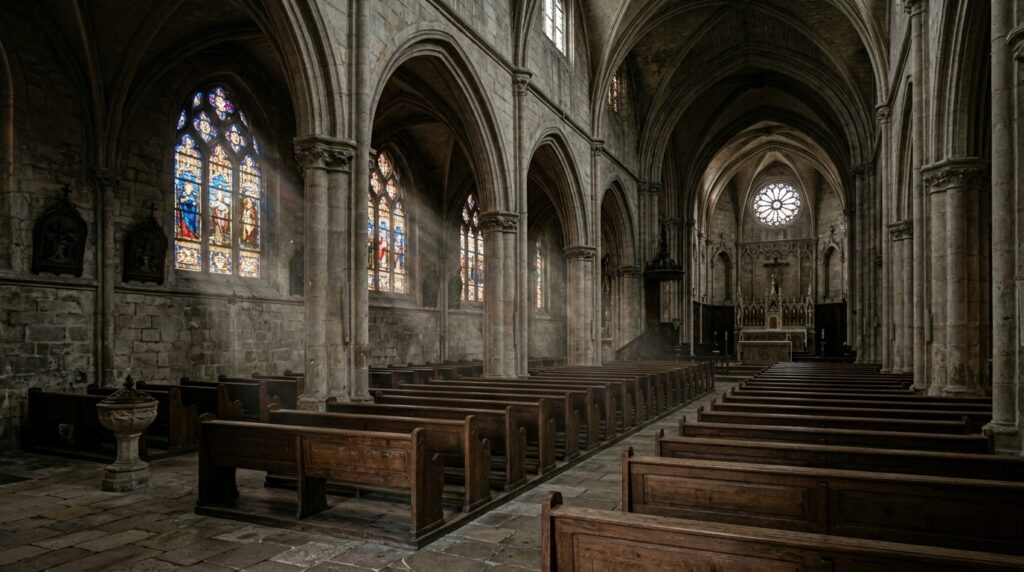
The new data confirms what many have sensed for years: in Europe and North America, the number of people who identify as Christian continues to shrink. In parts of Europe, historic churches that were once full now stand half-empty. In North America, affiliation is slowly declining, and large portions of the younger generation are distancing themselves from organized religion.
This decline does not mean that God has abandoned these regions. But it does expose how much of Western Christianity was intertwined with culture, habit, and social expectation. As those external supports weaken, what remains is a smaller, more visible core of believers who are choosing Christ in an environment that is no longer friendly or automatic.
From a prophetic perspective, the cooling of nominal faith in historically Christian nations should not surprise us. Jesus warned that “the love of many will grow cold” (Matthew 24:12), and Hebrews speaks of what can be shaken being removed, “in order that the things that cannot be shaken may remain” (Hebrews 12:27). In a painful way, the shaking of the West may be revealing what is truly rooted in Him.
Unexpected Growth in the Global South
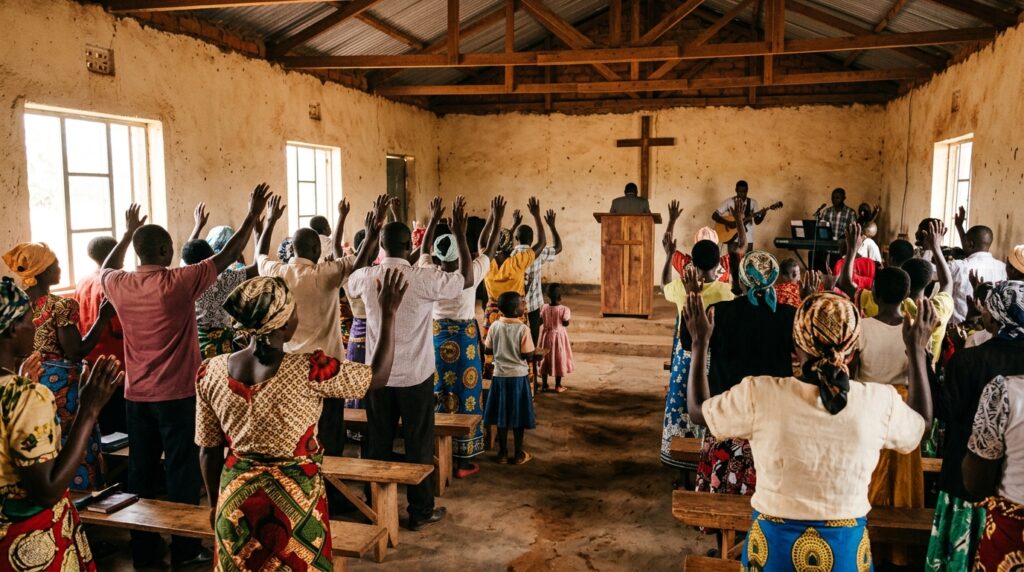
At the very moment when Christianity is shrinking in some Western contexts, it is growing in others. The center of gravity for the global church has been moving steadily toward Africa, Latin America, and parts of Asia. In many of these regions, believers gather in modest buildings, house churches, or outdoor spaces, often with few material resources but deep spiritual hunger.
Researchers note that while Christianity’s growth rate worldwide is slower than that of Islam, the number of followers of Jesus in the Global South continues to rise. Urbanization is bringing millions into sprawling cities where the church faces both new challenges and remarkable opportunities to reach people who have never heard the gospel clearly.
Passages like Acts 1:8—“you will be my witnesses… to the end of the earth”—are no longer abstract. In regions once seen only as destinations for Western missionaries, local believers are now sending their own workers beyond their borders. What some in the West perceive as a time of decline, others experience as a season of fresh advance.
Persecution, Displacement, and the Remnant
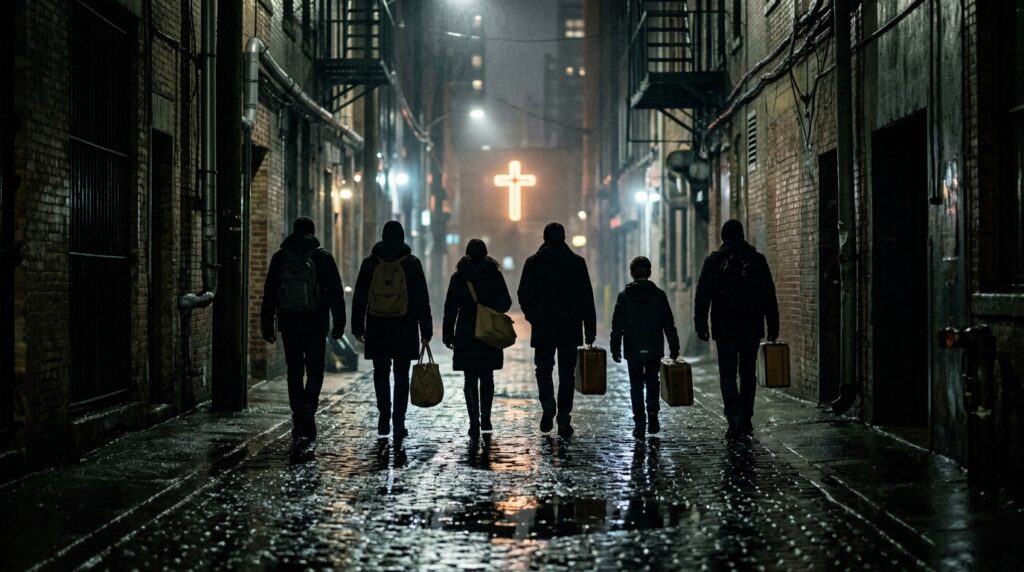
The report on global Christianity also highlights a darker reality: in several regions, believers face persecution, discrimination, and even violence because of their faith. In some countries, churches operate under heavy legal restrictions. In others, Christians are displaced by conflict, joining the growing number of refugees who carry both trauma and testimony wherever they go.
Scripture has always connected the advance of the gospel with the suffering of God’s people. Jesus said that His followers would be hated by all nations for His name’s sake and that many would fall away while others endure to the end (Matthew 24:9–13). The story of the early church is marked by scattering and pressure—and yet, in the middle of that, the word of God “continued to increase and spread.”
The language of “remnant,” used by Paul in Romans 11:5, is not about a tiny, elite group of superior believers. It is about God’s faithfulness to preserve a people for Himself when circumstances suggest that everything is collapsing. The fact that the church endures and even grows in hard places is not a sign that Christians are strong, but that God is.
What This Moment Might Be Saying to the Church
When we place all these pieces together—decline in old centers, growth in new regions, persecution, urbanization, and a still‑unreached world—we see a picture that is both fragile and full of purpose. It does not give us a date for the end. But it does echo Jesus’ words that the gospel would be preached in the whole world before the final chapter arrives (Matthew 24:14).
For believers in the West, the data is a wake‑up call. Cultural Christianity is fading, but that does not mean the church is finished. It means the church must become again what it was always meant to be: a distinct, humble, Spirit‑filled people who live as foreigners and witnesses in their own nations. For believers in the Global South, the numbers confirm what they already feel—the responsibility of carrying the gospel forward is now shared more widely than ever.
In the middle of all this, Revelation gives us a glimpse of the end of the story: “a great multitude that no one could number, from every nation, from all tribes and peoples and languages,” standing before the Lamb (Revelation 7:9–10). Whatever 2026 looks like on the ground, that is where history is heading. The shifting statistics of this year are not random. They are threads in a much larger tapestry that God alone sees clearly.

Global Christianity in 2026 is under pressure, but not abandoned. The numbers remind us that God is shaking what can be shaken and quietly building what will last forever. For those who watch and pray, this is not a time for panic, but for renewed faith, repentance, and readiness.
BIBLE REFERENCES
Matthew 24:9–14 (ESV); Revelation 7:9–10 (ESV); Hebrews 12:25–29 (ESV); Acts 1:8 (ESV); Romans 11:5 (ESV)