
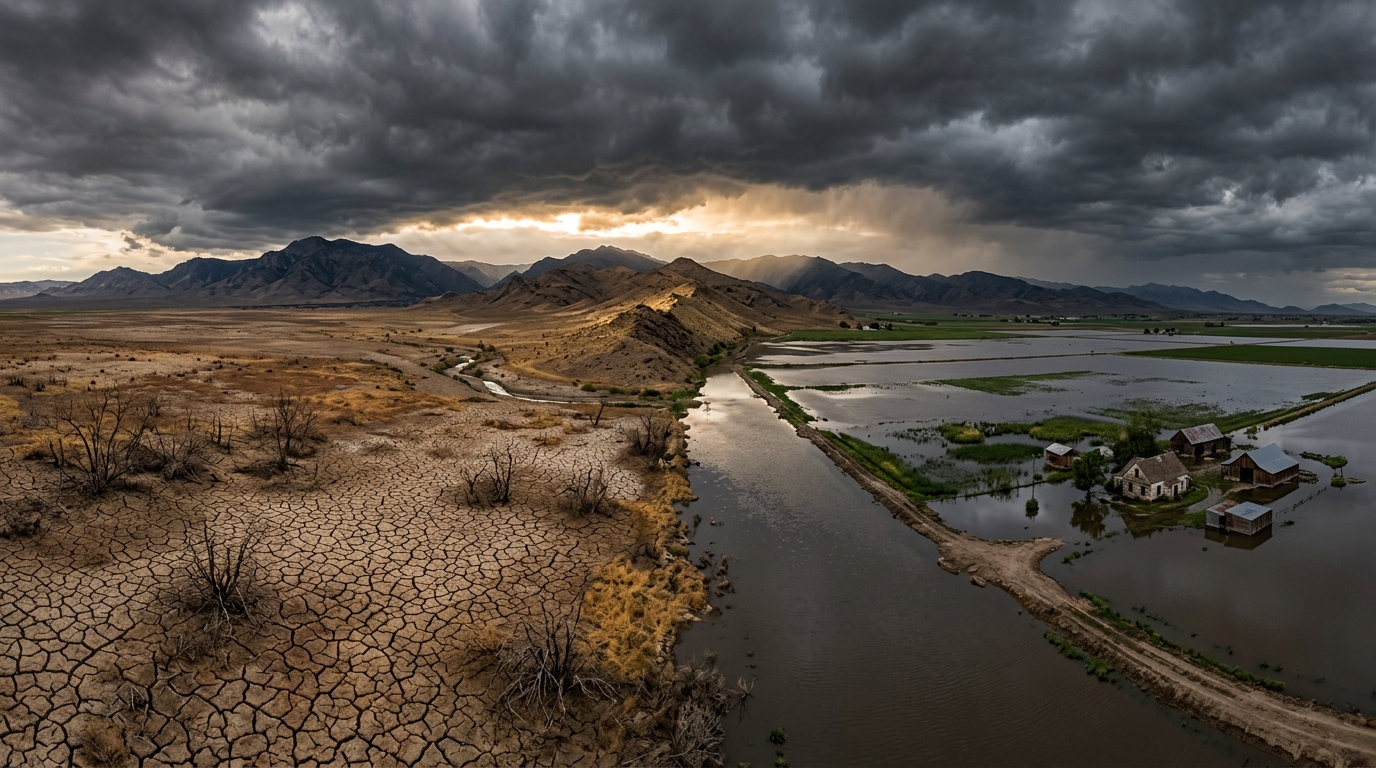
“For we know that the whole creation has been groaning together in the pains of childbirth until now.”
Romans 8:22 (ESV)
A Year That Starts With Extremes
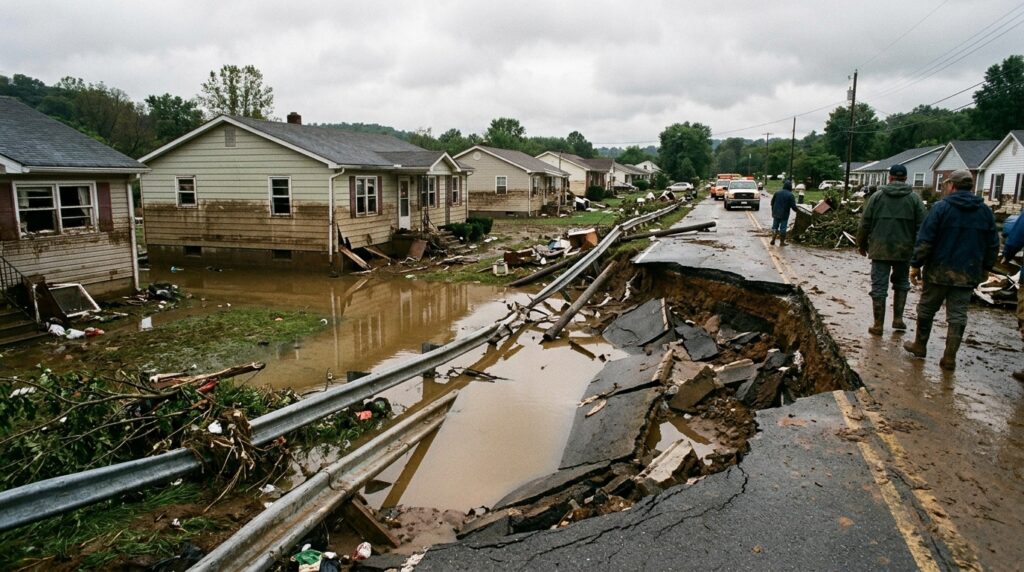
The year 2026 did not ease us in gently. Climate agencies report that January 2026 ranked among the warmest on record globally, with average temperatures significantly above both pre‑industrial and recent decades. At the same time, the opening months of the year have been marked by a mix of extreme heat, unusual cold, heavy rainfall, flooding, and large wildfires in different parts of the world.
International assessments warn that climate‑related risks—such as extreme weather, ecosystem stress, and long‑term Earth system changes—now sit near the top of the global risk landscape for the coming decade. In simple terms: the planet’s “normal” weather patterns are becoming less normal, and the cost of each new disaster is rising.
For Christians who watch world events through a biblical lens, these headlines raise hard questions. Are we simply witnessing the expected consequences of human choices, or are these extremes a direct sign that we are nearing the end? And more practically: how should followers of Jesus live when the weather itself seems restless?
Why 2026 Feels So Unstable
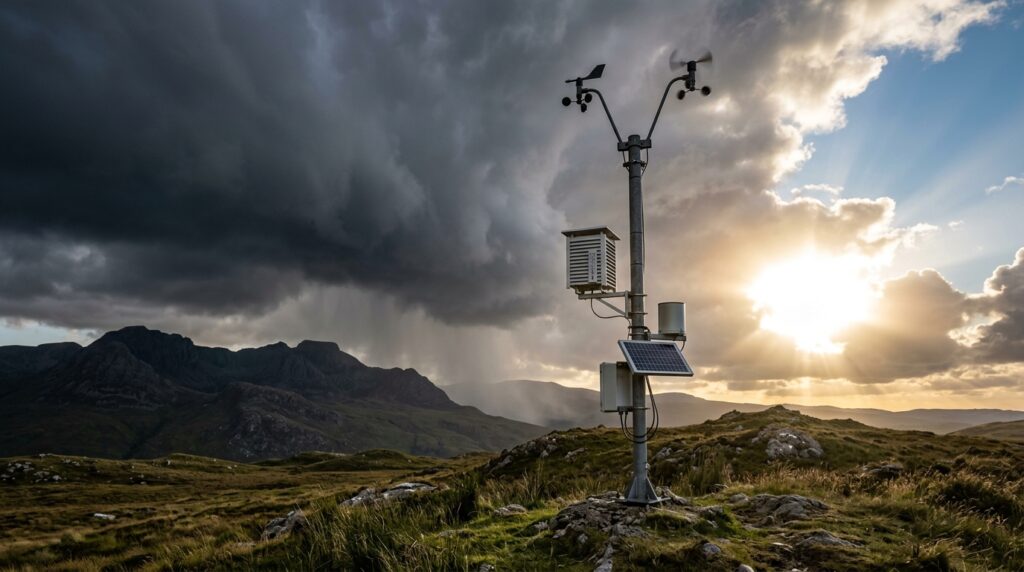
Climate scientists explain that long‑term warming is increasing the frequency and intensity of extreme weather events, turning what used to be “once in a generation” events into something far more common. Heatwaves arrive earlier and last longer, storms carry more moisture, and dry regions can swing rapidly between drought and flash flooding.
Recent analyses show that 2025 was already one of the hottest years on record, and early projections suggest that 2026 could again place among the warmest, with global temperatures hovering around 1.4–1.5°C above pre‑industrial levels. At the same time, vulnerability is not evenly shared. A climate risk index for 2026 highlights that some of the hardest‑hit countries are those with fewer resources to adapt, meaning the poorest often absorb the greatest damage.
This combination of rising physical risk and uneven impact is part of what makes the current moment feel so unstable. The ground beneath our feet—quite literally—seems less predictable. And yet, the Bible has been preparing us for a world where creation itself is not at rest.
Creation Groaning and the Question of Judgment
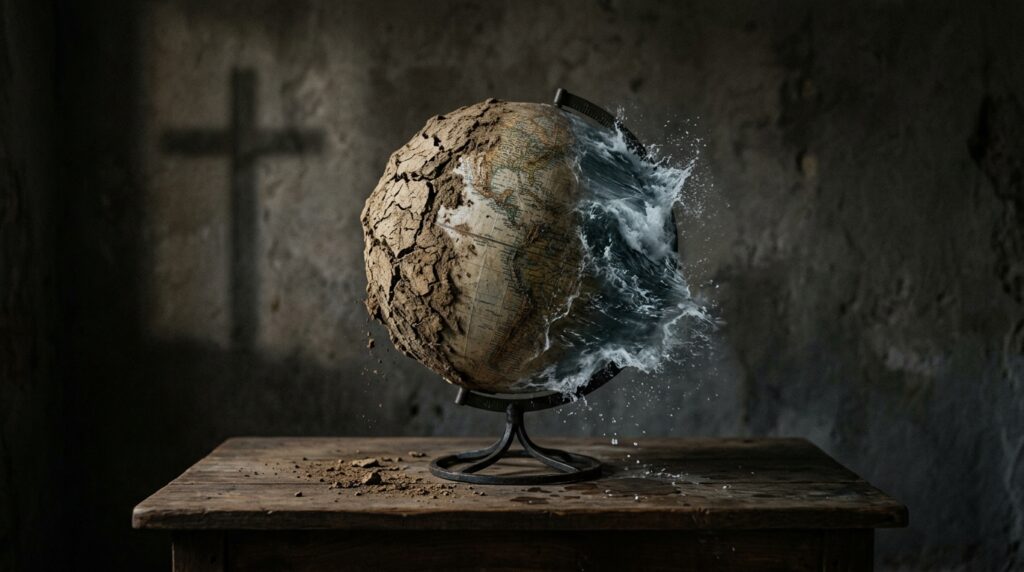
Romans 8 speaks of creation as “groaning together in the pains of childbirth” as it waits for liberation from decay (Romans 8:18–22). The picture is not of a stable, peaceful world slowly drifting toward a gentle ending, but of a creation under strain, affected by sin and awaiting restoration. In that sense, a world of intensifying storms and disrupted seasons should not surprise us.
At the same time, we must be careful not to treat every disaster as a direct, specific act of judgment on a particular city or nation. Jesus warned about wars, famines, and earthquakes in various places, describing them as “the beginning of the birth pains” (Matthew 24:6–8). He did not give His followers a chart that linked each earthquake or storm to a precise prophetic verse. Instead, He called them to endurance, discernment, and readiness.
When we see the climate system under pressure, we are seeing both the consequences of human choices and the deeper brokenness of a world under the weight of sin. The Bible invites us to read these signs soberly, not to assign blame lightly. We are not called to announce that a specific storm is God’s punishment, but to remember that we live in a creation that needs redemption—and to let that awareness drive us to humility and repentance, not pride.
Stewardship, Not Escape
One temptation in moments like this is to shrug and say, “The world is going to burn anyway, so why should we care?” Another is to treat environmental concern as if it belonged to a different religion. But Scripture gives us a very different starting point. From the beginning, God called humanity to exercise dominion over the earth as wise stewards, not reckless exploiters (Genesis 1:26–28).
For many Christians around the world, caring about climate and creation is not about worshiping the earth. It is about honoring the Creator by taking seriously the effects of our choices on land, water, air, and vulnerable neighbors. Research even shows that when believers hear climate issues framed in terms of “protecting God’s creation” and “stewardship,” they are more likely to see environmental responsibility as a moral and spiritual concern—not just a political debate.
Colossians tells us that all things were created through Christ and for Him, and that in Him all things hold together (Colossians 1:16–17). If that is true, then our response to a warming, disrupted world cannot be apathy or cynicism. It must be a renewed commitment to live as caretakers of what belongs to Him, even when we know that this present creation will one day be transformed.

Watching the Climate Without Losing Our Hope
Global risk reports now rank climate change, extreme weather, and environmental degradation among the most serious long‑term threats facing humanity. For many people, especially the young, this produces a kind of quiet despair: a feeling that the future is closing in, that it is too late to change anything, and that everything is sliding toward catastrophe.
The Bible does not minimize the seriousness of a world under judgment. Revelation speaks of God destroying those who destroy the earth (Revelation 11:18). But it also insists that history is not a random slide into chaos. The same Christ who holds all things together will return to make all things new. In that light, Christian hope is not naive optimism or blind denial. It is a steady trust that no amount of turbulence—political, economic, or climatic—can overturn His purposes.
For believers, watching the climate means more than tracking graphs and graphs of warming. It means praying for those already suffering, supporting wise and just responses, living more simply where we can, and refusing to let fear drive us into either paralysis or indifference. We know that creation is groaning, but we also know that it is groaning toward a renewal that only God can bring.
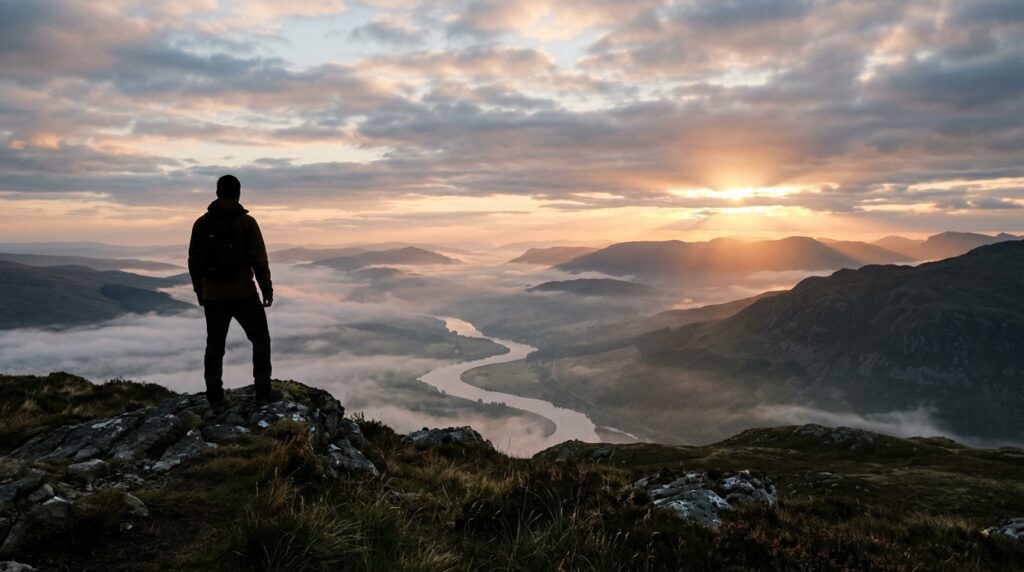
The climate turbulence of 2026 is serious, but it is not the final chapter. As the weather grows more unpredictable and the risks grow heavier, the call of Scripture is not to look away or to panic, but to fix our eyes on the One who will one day calm every storm. Until that day, we watch, we pray, and we steward His world with open hands and steady hearts.
BIBLE REFERENCES
Matthew 24:6–8 (ESV); Romans 8:18–22 (ESV); Genesis 1:26–28 (ESV); Colossians 1:16–17 (ESV); Revelation 11:18 (ESV)

Nice Post