
VIDEO SUMMARY
This video traces one strange word — Azazel — from Leviticus 16, where a goat bears Israel’s sin into the wilderness on the Day of Atonement. It explores three ancient readings of the word, then turns to the Book of Enoch, which names Azazel as a fallen Watcher who taught mankind war and vanity before the flood. The central tension is canonical: Enoch is not Scripture, yet Jude quotes it directly (Jude 14–15). The video shows how God’s restraint in Genesis and Leviticus reveals His character. He tells His people exactly what they need for salvation, and no more, pointing every shadow toward Christ, who carried sin outside the camp (Hebrews 13:12).

MAIN LESSONS
Lesson 1 — God’s Restraint Is Mercy, Not Neglect
Core idea: God did not owe Israel a full explanation of Azazel or the Watchers. What He withheld protects us as much as what He revealed.
In the narrative: Genesis gives only two verses on the sons of God and the Nephilim (Gen. 6:2, 6:4). Leviticus names Azazel once, with no definition at all. The Book of Enoch rushed in to fill that silence with names and scenes, and the church still did not receive it as Scripture.
Practical application: Stop treating unanswered questions in the Bible as problems to solve before you can trust it. When you hit a gap in Scripture, write it down and keep reading rather than searching for a book to fill it. Trust that what God said is enough for your walk with Him this week.
Highlight quote: “The Bible’s restraint is not a weakness. It is a mercy.”
Lesson 2 — Sin Must Be Carried Away, Not Just Covered
Core idea: The Day of Atonement did not merely hide Israel’s guilt. It removed that guilt from the camp entirely, through a living substitute.
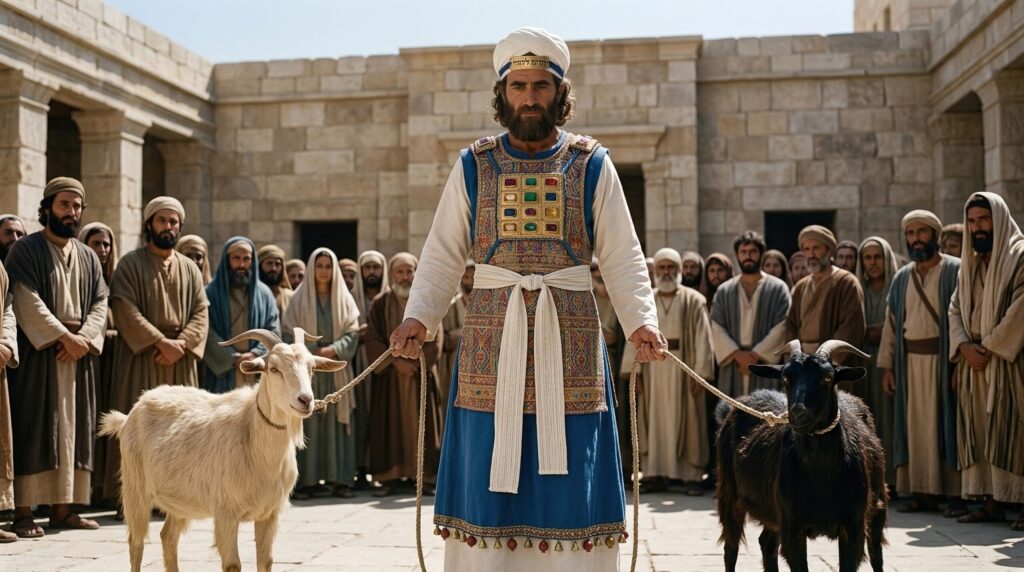
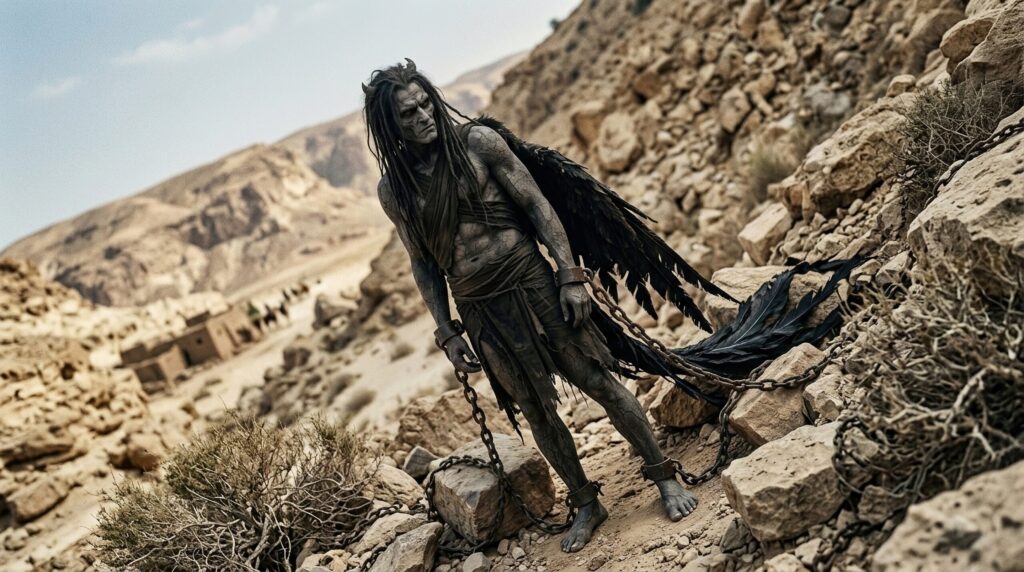
In the narrative: The high priest laid both hands on the goat and confessed the sins of the people over it (Lev. 16:22). The goat was then driven far from the camp, into the wilderness, never to return.
Practical application: This week, name one specific sin out loud in prayer instead of only feeling vague guilt about it. Ask God to remove it “as far as the east is from the west” (Psalm 103:12). Then act on that confession — make a call, repair a relationship, or break a habit tied to it.
Highlight quote: “Sin must be covered and carried away — not merely out of sight.”

Lesson 3 — Test Every Teaching Against Scripture, Not the Other Way Around
Core idea: Jude quoting Enoch (Jude 14–15) does not make Enoch inspired. A true line can come from an imperfect source without that source becoming Scripture.
In the narrative: Paul quoted pagan Greek poets in Acts. Jude lifted one prophetic line from Enoch under the Holy Spirit’s guidance. Neither act elevated the outside text to canon.
Practical application: Next time you read a book, podcast, or video about “hidden” biblical mysteries, ask a direct question. Does this add to what Scripture says, or does it explain what Scripture already reveals? Hold every claim about angels, judgment, or the unseen world up against the plain text before you accept it.

Lesson 4 — The Human Heart Is Corrupted by Both Violence and Vanity
Core idea: The Book of Enoch pairs the forging of weapons with the crafting of ornaments and cosmetics, treating both as instruments that drew hearts away from God.
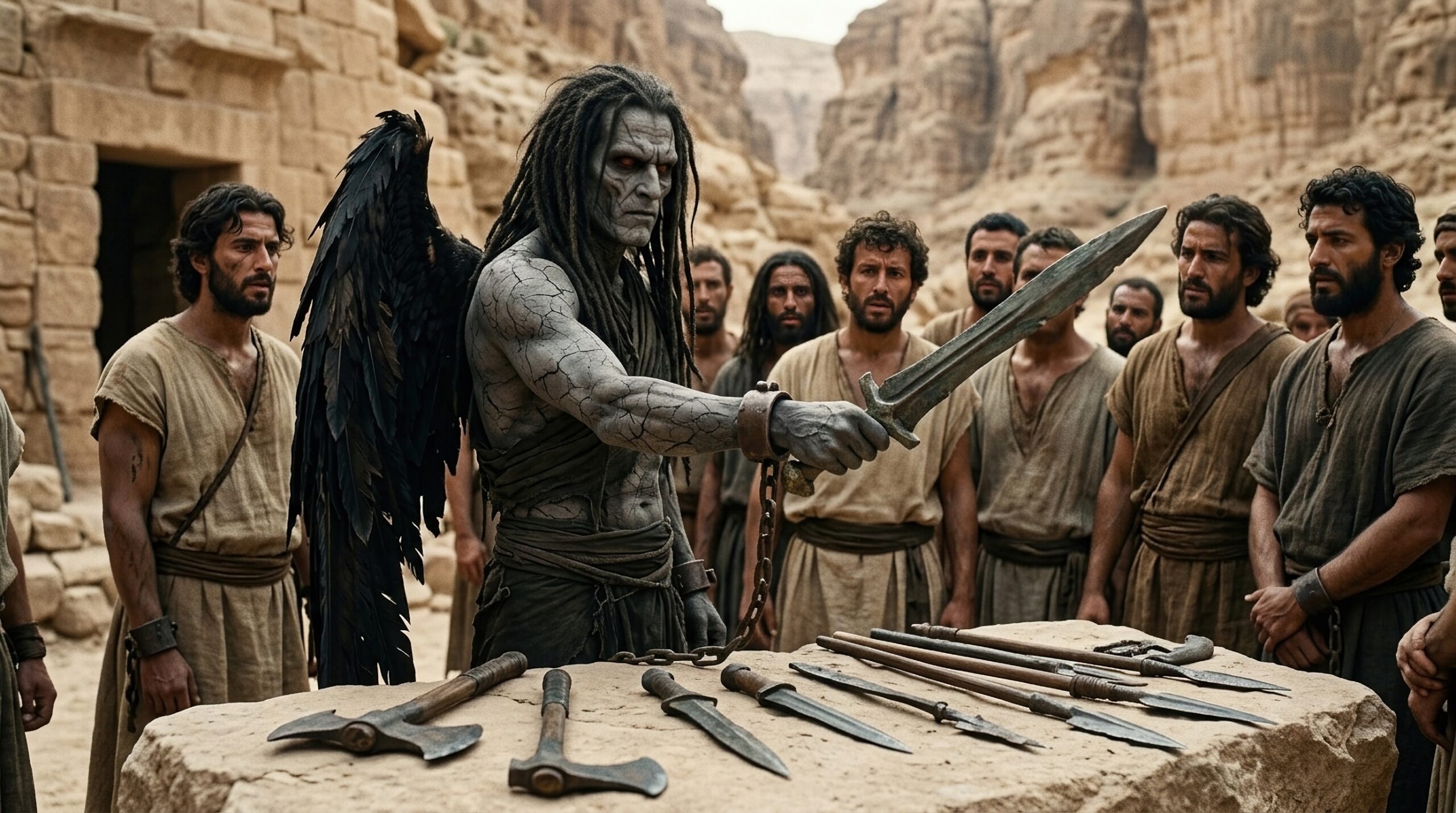
In the narrative: Azazel is said to have taught men to make swords and armor, and also to have taught adornment, dyes, and painted eyes. The text presents war and vanity as two branches of the same corruption.
Practical application: Examine one area where you chase image rather than substance — spending, appearance, or status online. Set one concrete limit this week, such as a spending cap or a screen-time boundary. Pair it with one act of humility, like giving away something you have been tempted to display.

Lesson 5 — Christ Fulfills What the Scapegoat Only Pictured
Core idea: The goat driven into the wilderness was never the final answer to sin. It was a shadow pointing toward Jesus.
In the narrative: The writer of Hebrews connects the sin offerings burned outside the camp to Jesus, who “suffered outside the gate” to sanctify His people (Heb. 13:12). What Israel reenacted once a year, Christ accomplished once for all.
Practical application: This week, replace any lingering sense that you must “make up for” past sin with a direct statement of what Christ already carried away. Write one sentence in a journal: “Jesus carried this outside the camp, and it is gone.” Return to that sentence whenever guilt resurfaces.
Highlight quote: “The guilt was carried away — outside the camp, outside the gate, forever.”

Together, these lessons form one picture. God reveals exactly what His people need, no more, and what He withholds is as purposeful as what He discloses. The scapegoat ritual shows that sin cannot merely be hidden; it must be confessed and carried away by a substitute. Ancient texts like Enoch can illuminate the world the New Testament writers lived in, but they never replace or complete Scripture. And every shadow in Leviticus finds its substance in Christ, who bore guilt outside the gate so it would never return.
This week, take three steps. Read Leviticus 16 in full, slowly, alongside Hebrews 13:11–13. Spend ten minutes in prayer naming one sin you have covered rather than confessed. Then make one concrete change — a conversation, a boundary, or a habit — that reflects the guilt Christ has already carried away. This will not resolve every mystery, but it will deepen your trust in the God who reveals enough.
SCRIPTURE REFERENCES AND CONTEXT
Passages cited in the script:
- Leviticus 16:22 — Describes the goat bearing Israel’s iniquities into a remote area; this is the ritual foundation of the entire video.
- Genesis 6:2 — The “sons of God” taking wives among “the daughters of man”; the verse the Book of Enoch expands upon.
- Genesis 6:4 — Names the Nephilim as “mighty men of old”; another gap the script shows Enoch attempting to fill.
- Jude 14–15 — Jude’s direct quotation of Enoch’s prophecy about the Lord’s coming judgment; the key evidence that first-century Jews knew this text.
- Psalm 103:12 — Used to show that God’s removal of sin is total and directional, “as far as the east is from the west.”
- Hebrews 13:12 — The theological climax, connecting the sin offering burned outside the camp to Christ’s suffering outside the gate.
Additional cross-references:
- Isaiah 53:6 — “The LORD has laid on him the iniquity of us all,” reinforcing the substitutionary pattern seen in the scapegoat.
- 2 Corinthians 5:21 — Christ “made sin” for us, extending the scapegoat typology into Pauline theology.
- Acts 17:28 — Paul quoting Greek poets, offered as a parallel case to Jude’s use of Enoch — a true statement drawn from a non-inspired source.
Theological concepts:
- Typology — A pattern in the Old Testament (like the scapegoat) that foreshadows a greater fulfillment in Christ.
- Divine judgment — God’s righteous response to sin and rebellion, shown here in both the flood and Azazel’s binding.
- Canon — The set of books the church recognizes as inspired Scripture; Enoch’s exclusion despite Jude’s quotation illustrates how this was discerned.