
VIDEO SUMMARY
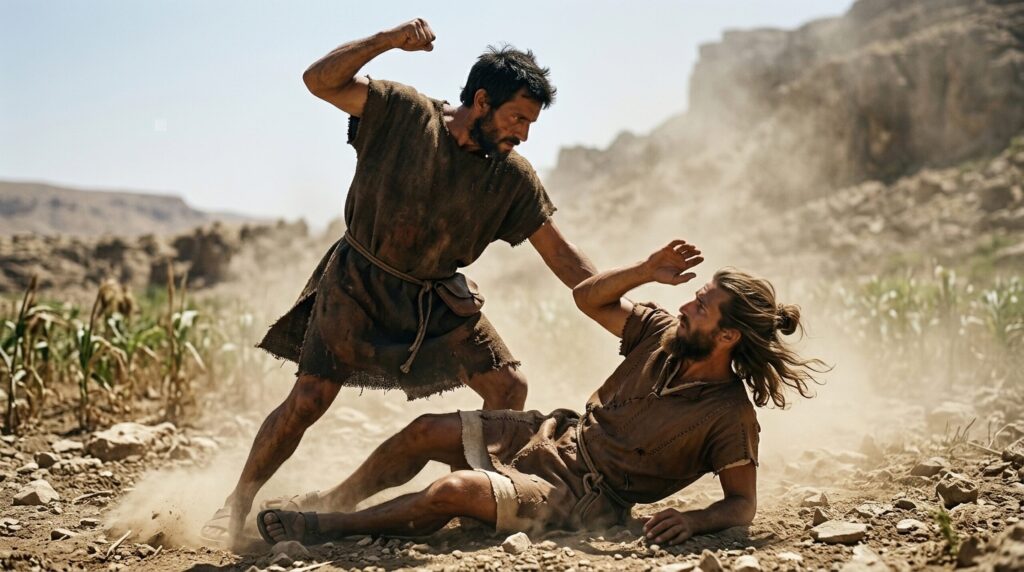
This video walks through the sixteen centuries between Eden and the flood, tracing two bloodlines moving in opposite directions. Cain murders Abel, then builds a city with no altar, founding a civilization of craftsmen, musicians, and warriors that never turns back to God. Seth’s line, by contrast, begins to call on the Lord’s name. The tension deepens when heavenly beings corrupt the earth further, producing the Nephilim, until “every intention of the thoughts of his heart was only evil continually” (Gen. 6:5). God’s response reveals His character: He grieves before He judges, and He saves a remnant through Noah, whose faith costs him decades of lonely obedience. The flood answers a question every generation asks: can changed circumstances make a corrupted heart clean? The video’s answer is no — pointing instead to Christ as the true door.
MAIN LESSONS
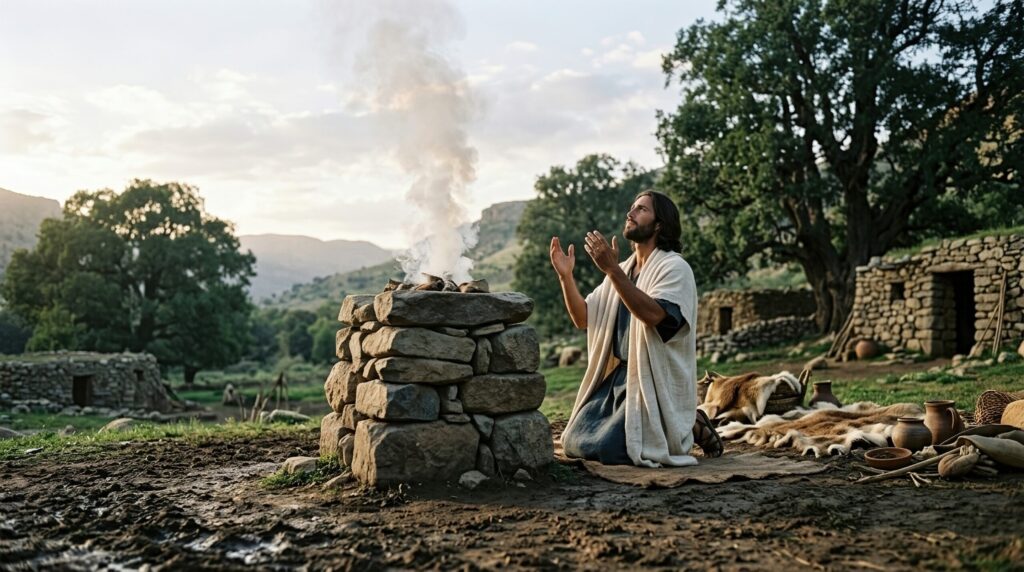
Lesson 1 — A Civilization Can Be Brilliant and Godless at Once
Core idea: Skill, art, and progress are not evidence of nearness to God. Cain’s descendants mastered music and metalwork while building a world with no altar in it.
In the narrative: Cain founds the first city and names it after his son, with “no mention of worship.” His descendant Jubal becomes the first musician, and Tubal-cain the first metalworker — beauty and bloodshed from the same household (Gen. 4:17–22). Lamech’s poem then turns violence into something to boast about, not hide.
Practical application: This week, audit one area of your life you take pride in — your career, a skill, your home — and ask whether it points toward God or has quietly replaced Him. Add one deliberate act of worship to that area, such as praying before you start work rather than after. Do not wait for a moral failure to reconsider what you have built.
Highlight quote: “A civilization becomes godless when it decides it would rather not remember.”

Lesson 2 — Sin Left Unanswered Becomes Sin Made Ordinary
Core idea: The antediluvian world’s horror was not extraordinary evil. It was evil that had become so normal no one could see it anymore.
In the narrative: Jesus described the generation before the flood as people “eating and drinking, marrying and giving in marriage,” not raging against God but simply unaware (Matt. 24:38–39). Genesis 6:5 records that every intention of the human heart was only evil, continually, with no qualifier left.
Practical application: Name one habit or attitude you have stopped questioning because everyone around you treats it as normal. Ask a trusted believer this week whether they see the same blind spot in you. Do not wait for conviction to arrive on its own; invite it through an honest conversation.
Lesson 3 — God’s Patience Has a Door, and He Closes It Himself
Core idea: God waited sixteen hundred years, sent Enoch and Noah as warnings, and still closed the ark’s door with His own hand when the time of grace ended.
In the narrative: Noah preached through decades of construction and “the Lord shut him in” (Gen. 7:16) — not Noah, not his sons. Once shut, the door did not open again, and “the laughter stopped.”
Practical application: If you have been putting off a specific response to God — repentance, forgiveness, obedience in one area — treat this week as your Noah moment. Choose one delayed obedience and act on it before Sunday. Remember that patience and permission are not the same thing.
Highlight quote: “Patience is not the same as permission, and the door, when it closed, did not open again.”
Lesson 4 — Judgment Comes from a Grieving Heart, Not a Cold One
Core idea: Before God judges the world, Scripture tells us He grieved. Wrath in Genesis 6 flows out of sorrow, not indifference.
In the narrative: “The Lord regretted that he had made man on the earth, and it grieved him to his heart” (Gen. 6:6). The judgment and the rescue of Noah were planned together in the same breath.
Practical application: The next time you feel God’s discipline in your own life, resist the urge to picture Him as distant or angry without cause. Sit with Genesis 6:6 in prayer and thank Him for a correction that costs Him grief to give. Let that truth soften how you respond to correction this week, rather than resenting it.
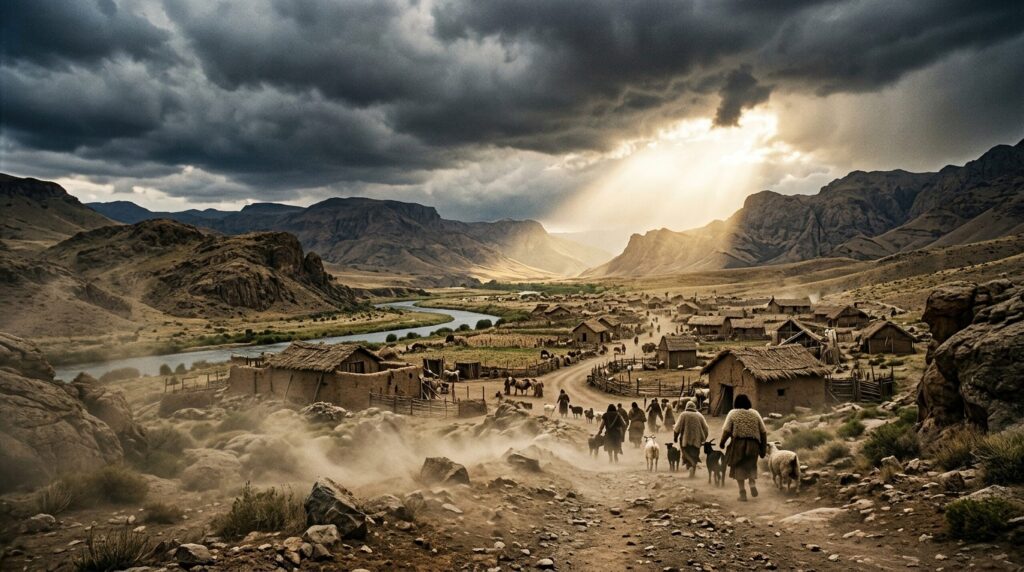
Lesson 5 — Christ Is the Door the Ark Only Pictured
Core idea: The flood proved that changing your circumstances cannot change your heart. Noah’s family carried sin safely through the water, and it surfaced again almost immediately.
In the narrative: After the flood, Noah’s shame and the tower of Babel show sin was never washed away by the water, only by what the water pointed toward. Jesus later said, “I am the door. If anyone enters by me, he will be saved” (John 10:9), echoing Noah’s single door on the ark.
Practical application: Stop looking to a new environment, job, or relationship to fix what only Christ can address in you. This week, identify one place where you are hoping circumstances will do what only repentance can do. Bring that specific area to Christ in prayer as the one door, not a change of scenery.
Highlight quote: “The water washed the world, but it did not wash the human heart.”
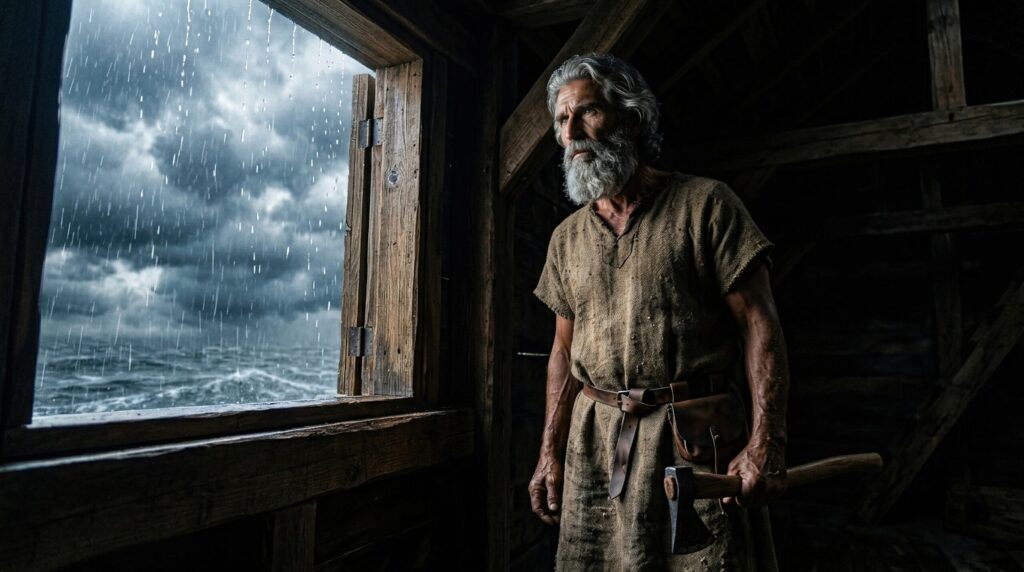
These five lessons trace one line through Genesis 4–9. A civilization can build cities, forge metal, and compose music while leaving no room for God, and that same forgetfulness spreads until evil feels ordinary rather than shocking. Yet even in that darkness, God’s patience is real and long, though never permanent — the door He opens, He also closes. His judgment is never cold; it is grief translated into action. And the flood itself proves that no change of circumstances can cleanse a human heart, which is exactly why Christ came as the one door that actually saves.
This week, take three steps. Read Genesis 6 through 9 in one sitting, watching for the two bloodlines and the two responses to God. Spend time in prayer naming one place where you have grown “unaware,” like the generation before the flood. Then choose one concrete act of delayed obedience — a conversation, a boundary, or a return to worship — and complete it before the week ends. The goal is not comfort. It is readiness.
SCRIPTURE REFERENCES AND CONTEXT
Passages cited in the script:
- Genesis 4:8–9 — Cain’s murder of Abel and his question “Am I my brother’s keeper?”; establishes the pattern of unrepentant sin.
- Genesis 4:17–22 — Cain’s city and the descendants who become the first musicians, herdsmen, and metalworkers; shows civilization without worship.
- Genesis 4:26 — “People began to call upon the name of the Lord,” marking Seth’s line as the counter-response to Cain’s.
- Genesis 5:24 — Enoch’s disappearance, “God took him,” a living exception in a genealogy of death.
- Genesis 6:1–4 — The “sons of God” and the Nephilim, the script’s central and most debated passage.
- Genesis 6:5–6 — God’s verdict on humanity’s total corruption and His grief over it.
- Genesis 6:8–9 — Noah’s favor and his description as “righteous” and “blameless.”
- Genesis 7:16 — “The Lord shut him in,” the decisive close of the door of grace.
- Genesis 9:13 — The rainbow as the sign of God’s covenant after the flood.
- Jude 6 — Angels who left their proper dwelling, kept in chains until judgment; supports the heavenly-beings reading of Genesis 6.
- 2 Peter 2:4–5 — Peter’s parallel statement on angels who sinned and God’s patience preserving Noah.
- Matthew 24:37–39 — Jesus comparing His return to “the days of Noah,” people unaware until the flood came.
- John 10:9 — Jesus as “the door,” echoed against Noah’s single door into the ark.
Additional cross-references:
- Genesis 4:10 — Abel’s blood “crying out” from the ground, echoed later in the Enoch tradition’s account of the earth’s cry against violence.
- 2 Peter 3:9 — God’s patience explained directly: “not wishing that any should perish, but that all should reach repentance.”
- Numbers 13:33 — The Israelite spies’ report of giants in Canaan, tying the Nephilim theme forward into the conquest narrative.
Theological concepts:
- Common grace and general revelation — Even the godless line of Cain displayed real skill and creativity, showing that human ability is not proof of nearness to God.
- Remnant — The biblical pattern where God preserves a faithful few, seen here in Noah’s household, through judgment.
- Covenant sign — A visible token, like the rainbow, that seals God’s promise and reminds His people of His commitment.