

VIDEO SUMMARY
This video traces the thread of Amalek from Genesis 36 through Esther, showing how one people’s contempt for God’s covenant shaped five centuries of biblical history. Amalek descends from Esau, a man who knew the promises of God and despised them anyway. Their attack on Israel’s weakest stragglers at Rephidim (Exod. 17) earns a divine sentence: God will war against them from generation to generation. The central tension arrives in 1 Samuel 15, when King Saul defeats Amalek but spares King Agag and the best plunder, dressing disobedience as worship. That single “almost” allows Agag’s line to survive, resurfacing centuries later in Haman the Agagite, who nearly exterminates the Jewish people in Esther. The video’s answer to this unfinished obedience is Christ, whose total obedience at the cross — “It is finished” — breaks the pattern Saul could not.

MAIN LESSONS
Lesson 1 — Knowing the Covenant Is Not the Same as Honoring It
Core idea: Amalek’s hostility toward God did not begin as ignorance from outside the covenant family. It began inside it, with Esau, who knew the promise and treated it as ordinary.
In the narrative: Amalek descends from Esau through Eliphaz and Timna (Gen. 36:12), placing him in the household that carried Abraham’s blessing. Hebrews calls Esau “unholy,” a word meaning to treat the sacred as cheap (Heb. 12:16), for trading his birthright for a bowl of stew.
Practical application: This week, identify one sacred thing in your life — a Sunday, a relationship, a calling — that you have quietly started treating as ordinary. Restore one specific boundary around it, such as protecting a set time for worship or prayer without interruption. Do not wait until you have “fallen away” to notice the shrug has already started.
Highlight quote: “The tragedy was never that Esau was starving. It was that the covenant felt less real than a bowl of stew.”

Lesson 2 — Evil Reveals Itself in Whom It Chooses to Attack
Core idea: Amalek’s character is shown not by what they attacked, but by when and whom. They struck Israel’s faint and lagging, not their warriors.
In the narrative: Deuteronomy specifies that Amalek “cut off those who were lagging behind” when Israel was “faint and weary” (Deut. 25:17–18). This came right after the exodus from Egypt, at Israel’s lowest and most exposed moment.
Practical application: Notice where you or someone near you is exhausted, isolated, or lagging behind this week, and treat that as a place needing protection, not neglect. Check in on one person you know is struggling rather than waiting for them to ask for help. Refuse any temptation, in conflict or ambition, to press an advantage against someone weaker than you.

Lesson 3 — Partial Obedience Is Still Disobedience
Core idea: Saul did not refuse God’s command outright. He completed most of it, and Scripture treats “almost” as failure, not partial credit.
In the narrative: Samuel commands Saul to devote Amalek entirely to destruction (1 Sam. 15:3), yet Saul spares Agag and the best livestock, destroying only “what was despised and worthless” (1 Sam. 15:9). Samuel later tells him the kingdom has been torn from him over this single incomplete act (1 Sam. 15:28).
Practical application: Look for the one command or conviction you have mostly obeyed while quietly keeping a piece of it back. Name that specific piece today, out loud or in writing. Finish it this week rather than treating “mostly” as good enough.
Highlight quote: “He almost finished. And almost, here, was the same as failure.”

Lesson 4 — Spiritual Language Can Disguise Disobedience
Core idea: Saul did not call his choice rebellion. He called it worship, claiming the spared animals were meant for sacrifice, and the excuse did not hold.
In the narrative: When confronted, Saul says the people kept the best animals “to sacrifice to the Lord” (1 Sam. 15:15). Samuel answers that obedience matters more than sacrifice, and that “to obey is better than sacrifice” (1 Sam. 15:22).
Practical application: Examine one decision this week where you have used religious language to justify keeping something you were told to release, whether a grudge, a habit, or a possession. Ask a spouse, friend, or mentor to test that justification honestly with you. Choose obedience over the explanation, even if the explanation sounds pious.
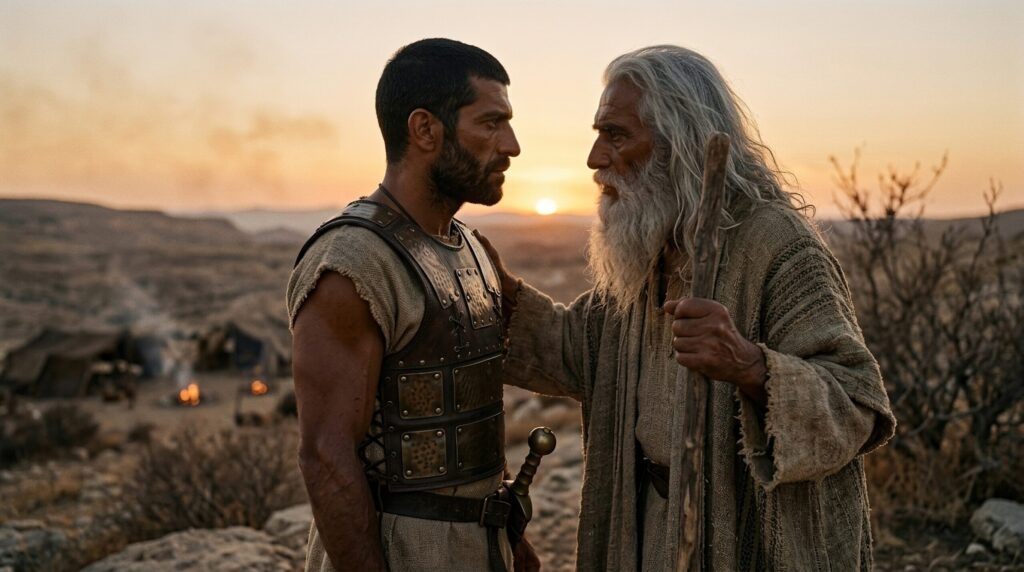
Lesson 5 — Christ’s Total Obedience Finishes What Ours Cannot
Core idea: Saul’s incomplete obedience let Agag’s line survive and nearly cost Israel its future. Christ’s obedience left nothing unfinished and no claim for the enemy to stand on.
In the narrative: Haman the Agagite, Agag’s descendant, nearly exterminates the Jewish people centuries later (Esther 3:1, 13), a direct consequence of Saul’s “almost.” Jesus, by contrast, declares “It is finished” from the cross (John 19:30), completing what partial obedience never could.
Practical application: Bring the specific area you named in Lesson 3 to the cross this week, not just to your own effort. Pray through John 19:30 and ask God to finish, through Christ’s obedience, what your own obedience keeps leaving incomplete. Let this shape how you approach your next struggle with partial surrender — as a place to trust Christ’s finished work, not just try harder.
Highlight quote: “He did not say, ‘It is mostly finished.’ He said, ‘It is finished.'”

These five lessons trace one pattern across Genesis, Exodus, 1 Samuel, and Esther. Contempt for the covenant can grow inside a family that knows God well, revealing itself in a willingness to prey on the weak. That same contempt resurfaces whenever we treat obedience as optional or negotiable, dressing our leftovers up as worship. Saul’s small, unfinished obedience over one king and one herd nearly cost Israel everything five centuries later — proof that “almost” is never as small as it feels in the moment. Only Christ’s complete obedience finally breaks that pattern for good.
This week, take three steps. Read 1 Samuel 15 in full, watching for the exact moment Saul’s obedience turns partial. Spend time in prayer naming your own “Agag” — the one thing you have mostly surrendered but not fully released. Then take one concrete action to finish it, and thank Christ specifically for the obedience that finishes what yours cannot.
SCRIPTURE REFERENCES AND CONTEXT
Passages cited in the script:
- Genesis 36:12 — Amalek’s birth to Eliphaz and Timna, establishing his direct descent from Esau.
- Hebrews 12:16 — Esau called “unholy,” treating his birthright as cheap; the origin of Amalek’s inherited contempt.
- Exodus 17:8–13 — Amalek’s ambush at Rephidim and Israel’s victory as Moses’ hands are held up.
- Exodus 17:14–16 — God’s decree to blot out Amalek’s memory and war against them “from generation to generation.”
- Deuteronomy 25:17–18 — The specific detail that Amalek attacked Israel’s faint and lagging stragglers.
- Joshua 2:10 — Rahab’s testimony that the nations already knew of the Red Sea crossing, showing Amalek’s attack was not born of ignorance.
- Judges 6:3–5 — Amalek’s return alongside Midian, repeating the same predatory pattern.
- 1 Samuel 15:3, 9, 15, 22, 28 — Saul’s command, his partial obedience, his excuse, Samuel’s rebuke, and the loss of the kingdom.
- Esther 3:1, 13 — Haman identified as “the Agagite” and his decree to exterminate the Jewish people.
- John 19:30 — Christ’s declaration “It is finished,” presented as the resolution to Saul’s incomplete obedience.
Additional cross-references:
Genesis 25:29–34 — Esau selling his birthright for stew, the root event behind Hebrews 12:16.
1 Samuel 13:13–14 — An earlier instance of Saul’s partial obedience, showing this was a pattern in his kingship, not an isolated lapse.
Colossians 2:13–14 — Christ canceling the record of debt against us, paralleling the total, no-remainder nature of His obedience.